
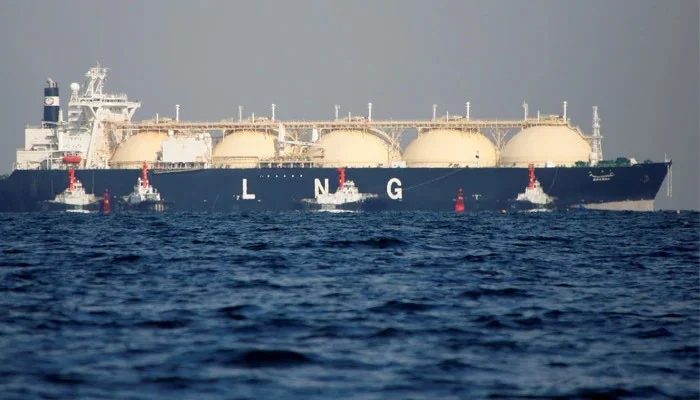
Pakistan has decided to seek three LNG cargoes from Qatar during October as uncertainty over supplies through the Strait of Hormuz deepens, with the government preparing to engage Iranian authorities to facilitate the safe passage of LNG vessels. The move comes as QatarEnergy has extended its force majeure on LNG supplies to Pakistan until November 4, while officials fear the disruption could persist through the winter, potentially depriving Pakistan of a significant number of cargoes under its long-term LNG supply agreements.
The government is now racing against time to secure adequate LNG supplies before winter demand peaks, particularly in Punjab, Khyber Pakhtunkhwa, Azad Jammu and Kashmir and the northern areas. Officials said Pakistan had managed to arrange two LNG cargoes from Qatar in September after taking to both Iranian and US authorities into confidence. The first cargo arrived around September 10, followed by another on September 23.
However, securing three cargoes for October could prove more difficult amid continuing uncertainty over the Strait of Hormuz and the absence of a broader peace arrangement between the United States and Iran. For now, the government is focusing on arranging the three October cargoes from Qatar while working to keep diplomatic channels open over the Strait of Hormuz. The government has so far not decided to enter the spot LNG market, despite the possibility of supply shortages.
Spot LNG is currently estimated to cost around $28-$30 per MMBtu, with a single cargo potentially costing Pakistan about $100 million - a price officials say would put considerable pressure on the country's finances. For Pakistan, already facing significant external financing and energy-sector pressures, purchasing large volumes of expensive spot LNG could prove financially challenging. The timing is particularly critical as temperatures have already fallen across northern parts of the country, pushing up demand for regasified LNG (RLNG).
According to gas system data as of October 5, 2026, the power sector was consuming around 237 million cubic feet per day (mmcfd) of RLNG, while the fertiliser sector was using approximately 88 mmcfd and the export and non-export sectors around 175 mmcfd. Demand is expected to rise sharply as winter progresses. Officials estimate that Pakistan will require around nine LNG vessels in December, while demand could climb to approximately 11 cargoes in January 2027, when the country traditionally experiences its peak winter gas requirements.
The possibility of prolonged force majeure by QatarEnergy has therefore raised concerns over whether Pakistan will be able to arrange the required number of LNG cargoes during the critical winter months. Officials have warned that if the force majeure continues from mid-November 2026 through February 2027, the gas supply situation could become extremely tight. Under such a scenario, RLNG supplies to several major sectors - including power, export-oriented industry, non-export industry, commercial consumers, general industry, cement and CNG - could face severe restrictions.
System gas would have to be prioritised for domestic consumers, particularly for cooking and other essential household requirements. Officials cautioned that even consumers currently receiving system gas could increasingly be forced to turn to LPG cylinders if the winter supply gap widens. The expected LNG shortfall could consequently trigger a sharp increase in LPG demand, putting additional pressure on both availability and prices.
Officials said the government would need to ensure adequate LPG supplies in the domestic market at affordable prices before the winter shortage becomes acute. They warned that an 11.8-kilogram LPG cylinder could rise to Rs7,000 or more in the open market if supply constraints intensify, compared with prices of more than Rs5,000 currently being reported in the open market, much higher than OGRA's notified prices.
This would place another burden on households already facing higher energy costs, particularly in areas where piped gas supplies become inadequate during the winter months. On the infrastructure side, officials said the Engro LNG terminal is currently available, as the LNG vessel that berthed on September 10 has been consumed. The PGPL terminal is curently regasifying LNG from the vessel that arrived on September 23.
The coming weeks could prove crucial for Pakistan's winter energy security, with the government facing a difficult balancing act between securing expensive spot LNG, negotiating additional supplies and managing increasingly tight domestic gas availability. If Qatar's force majeure extends further into the winter, officials fear Pakistan could face not only an LNG supply crisis but also a sharp increase in LPG demand and prices, turning the approaching winter into a major test for the country's energy management.