
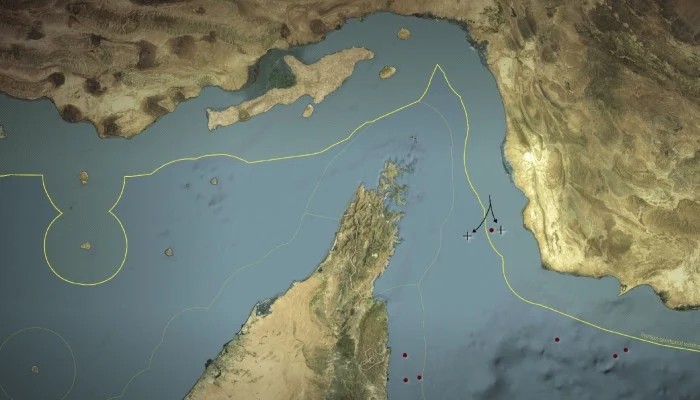
Iran has presented seven conditions to the United States through intermediaries, making it clear that unless Washington agrees to them, the Strait of Hormuz will not be reopened under the agreement being signed with Oman on Monday. Iran has not officially released the seven conditions. Yet, a senior Iranian foreign ministry official, speaking on condition of anonymity, said that a review of the negotiations held in the recent past would make all of the conditions apparent.
These conditions have been presented at a time when Iran is scheduled to host an important meeting in Muscat on Monday, with representatives from Iraq and the Gulf countries also expected to attend. According to sources, these countries will not be direct parties to the agreement between Iran and Oman.
Their invitation is aimed at briefing them on the details of the new route and transit arrangements, while also creating a diplomatic impact through their presence. According to Iranian media reports, under the agreement reached between Iran and Oman, the entry route into the Persian Gulf will pass entirely through Iranian waters, while the exit route from the Persian Gulf will pass partially through Iranian waters.
Transit operations will be conducted under Iranian arrangements. By signing this document, the southern route, whose reopening the United States has been insisting upon, will be closed as negotiations continue between regional stakeholders and international powers.