
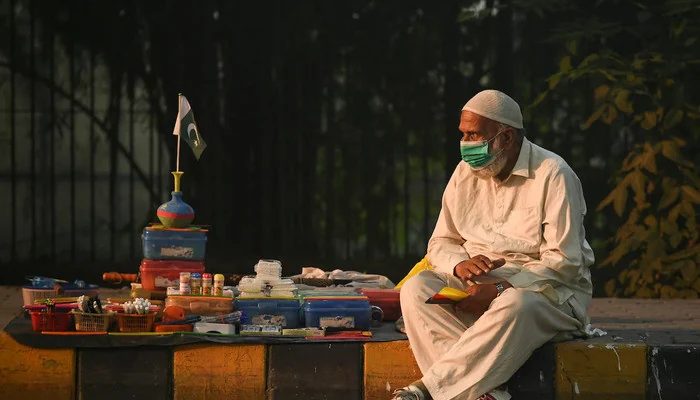
Lahore has topped the global ranking of the world's most polluted cities, recording an Air Quality Index (AQI) of 240, according to an international air quality monitoring website, as toxic air continues to shroud the provincial capital. The air quality in Punjab's capital is well within the range of "very unhealthy," according to the Swiss air quality monitor's data.
The city's PM2.5 concentration, harmful airborne particles small enough to penetrate deep into the lungs, was 33 times the World Health Organisation's (WHO) annual guideline, IQAir said. The website also recorded an AQI of 283 in Faisalabad, 245 in Peshawar, and 228 in Gujranwala, highlighting poor air quality across several major cities.
Punjab authorities blamed poor air quality this week on pollution drifting from neighbouring India, where firecrackers set off during the Hindu festival of Diwali over the weekend blanketed much of the north in toxic smog. Punjab Environment Protection Minister Marriyum Aurangzeb said light winds carried pollutants into the region from India after Diwali.
"However, air pollution is expected to gradually decrease from early afternoon as weather conditions improve and winds shift direction," she said. India's foreign ministry did not immediately respond to a request for comment regarding the cross-border pollution concerns raised by Pakistani officials.
IQAir ranked Delhi the world's second-most polluted major city on Tuesday, with an AQI of 188. Indian government data showed that firecrackers were responsible for nearly 55% of the PM2.5 in the Indian capital a day earlier, contributing significantly to the regional haze.
Vehicle emissions, construction dust, and smoke from crop-waste burning are also major contributors to winter pollution on both sides of the border. Experts warn that without coordinated regional efforts, the smog season will continue to pose severe health risks to millions of residents in the Punjab province.
Health officials have advised citizens to wear masks when stepping outdoors and to keep windows closed during peak pollution hours. The provincial government is currently reviewing emergency measures to curb industrial emissions and traffic congestion to mitigate the impact of the smog.
As the winter season progresses, the temperature inversion phenomenon is expected to trap pollutants closer to the ground, potentially worsening the situation if wind patterns do not remain favorable. The government remains under pressure to implement long-term solutions to address the recurring environmental crisis.
Environmentalists emphasize that the reliance on traditional farming methods, such as burning crop residue, remains a critical challenge that requires modern technological interventions and government subsidies for farmers to adopt sustainable alternatives. The provincial administration has reiterated its commitment to monitoring the situation closely and coordinating with meteorological departments to provide timely updates to the public regarding air quality improvements or potential health alerts.