
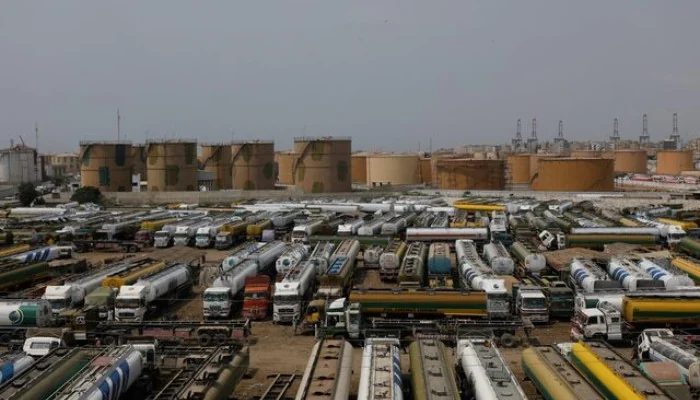
Pakistan avoided new US tariffs on crude imports after diplomatic talks, securing a 19% tariff reduction and boosting American oil imports.
- Pakistan secured a 19% tariff cut on US goods.
- Cnergyico imported 10 million barrels of US crude in FY2025‑26.
- Pricing formula changes caused a Rs24 billion loss for refineries.
Trade Negotiations
In April 2025 Washington announced a 29 percent reciprocal tariff on Pakistani goods, citing a US trade deficit of about $3 billion. Prime Minister Shehbaz Sharif launched bilateral talks involving the finance, commerce and foreign ministries. A breakthrough came in June 2025 when President Donald Trump hosted Field Marshal Syed Asim Munir for lunch at the White House, where trade partnership prospects were discussed. The negotiations culminated on 31 July 2025 with a trade arrangement that cut the tariff from 29 percent to 19 percent and opened avenues for energy cooperation. In September 2025 the prime minister and the field marshal met again at the White House, shifting the conversation from aid to trade. "The private sector's job was to walk through it with real commercial transactions, and US crude was one of the fastest ways to do that," said Cnergyico Vice Chairman Usama Qureshi.
Crude Import Surge
Cnergyico received Pakistan's first shipment of US crude in October 2025 when the MT Pegasus, loaded in Houston, arrived at its offshore single‑point mooring (SPM) facility near Hub. The SPM can accommodate Suezmax and very large crude carriers (VLCCs). During FY2025‑26 the company imported about 7.1 million barrels of American crude worth $750 million. Between October 2025 and November 2026 cumulative imports reached 10 million barrels of West Texas Intermediate (WTI) light sweet crude, valued at roughly $1 billion. State Bank of Pakistan data show that Pakistan's import payments to the United States surged 38.93 percent to $3.265 billion in FY2025‑26, from $2.350 billion a year earlier, with Cnergyico's purchases accounting for about 82 percent of the increase. Pakistan's exports to the US rose from $6.031 billion to $6.125 billion, while the bilateral trade surplus narrowed from $3.68 billion to $2.86 billion, falling from 61 percent to 47 percent of export receipts.
Pricing and Policy Challenges
In April 2026, following changes to the diesel pricing formula, the country's four refineries suffered losses of about Rs24 billion. On 31 October, the government revised the petrol pricing mechanism, linking imported petrol to the latest Pakistan State Oil cargo costs while freezing premiums, incidentals and customs duty at March 7 levels. The refineries have jointly approached the petroleum minister seeking withdrawal of the mechanism, arguing it creates a levy differential of Rs49.02 per litre against locally produced petrol and breaches commitments under the Brownfield Refining Policy. "What stops us is that the pricing formula for petroleum products keeps changing, often without any consultation," Qureshi said. "A refiner cannot commit to long‑haul crude, and lenders cannot commit to upgrade financing, when the rules on which our margins depend can be rewritten overnight." Cnergyico is seeking access to the proposed US Export‑Import Bank trade‑financing facility to increase its purchases of American crude and is exploring $150 million to $300 million in foreign financing for a planned refinery upgrade costing $1.2 billion to $1.5 billion. The company also plans to import at least 12 million barrels of US crude during the current fiscal year, equivalent to one million‑barrel cargo each month. The growing importance of bilateral energy cooperation was highlighted by US Charge d'Affaires Natalie Baker's November 6 visit to Cnergyico's refining complexes at Mouza Kund, Hub. The issue now extends beyond refinery margins, demanding policy consistency to sustain the trade advantage with the United States.