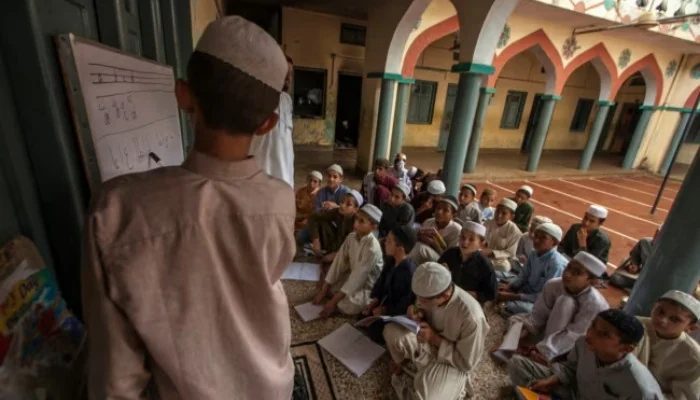
The registration of religious seminaries with the Punjab Charities Commission (PCC) is gaining momentum, with 35 Deeni Madaris having received certificates and three major religious education boards approaching the commission to initiate registration of their affiliated institutions. The latest figures show that 125 seminaries have signed up on the commission's online portal, more than 40 have submitted the required documents and 35 have completed the process and received registration certificates, indicating growing participation by religious educational institutions in the provincial regulatory mechanism.
- 125 seminaries have signed up on the Punjab Charities Commission's online portal.
- 35 seminaries have received registration certificates from the commission.
- Three major religious education boards · Wafaq-ul-Madaris Al‑Islamia Rizvia Pakistan, Majma-ul-Madaris Al‑Islamia Pakistan and Nizam-ul-Madaris Pakistan · have begun the registration process for their affiliated institutions.
Lahore
The development marks progress since the initial registration drive, with the involvement of major Madaris boards emerging as an important step towards extending the process to a wider network of religious seminaries across Punjab. Among the institutions that have received PCC registration certificates are Rabita-ul-Madaris Al‑Islamia Pakistan, Dar‑ul‑Uloom Jamia Naeemia, Lahore, Jamia Tur Rasheed and Dar‑ul‑Uloom Muhammadiya Ghausia, Bhera, Sargodha. The three major religious education boards that have visited the commission and initiated the registration process for their affiliated institutions are Wafaq-ul-Madaris Al‑Islamia Rizvia Pakistan, Majma-ul-Madaris Al‑Islamia Pakistan and Nizam-ul-Madaris Pakistan, Lahore.
Punjab Charities Commission
Their participation is expected to facilitate the registration of seminaries operating under their respective affiliations and improve coordination between the regulatory authority and religious education networks. According to the commission, registration certificates are being issued within five to seven working days after scrutiny of applications, verification of documents and completion of the required due diligence. The commission has also established a dedicated Special Facilitation Desk for Madaris to guide applicants through documentation, online registration and other procedural requirements.
Registered seminaries have expressed satisfaction with the process and appreciated the assistance provided by the dedicated desk, which is intended to make registration easier and reduce procedural difficulties for religious institutions. On the directions of Punjab Home Secretary and Khawaja Salman Rafique, chairperson of the Cabinet Committee on Law and Order, the PCC is extending facilitation to Deeni Madaris through what it describes as a transparent, efficient and supportive registration mechanism.
The commission is also strengthening coordination with the leading Madaris boards to encourage their affiliated institutions to complete the required formalities. The engagement of these boards is particularly significant because their networks include a large number of seminaries operating in different parts of the province. The registration process has gained importance against the backdrop of the multiple legal and administrative arrangements governing religious seminaries in Pakistan.
Punjab Societies Registration (Amendment) Act 2026
The federal government operates a registration mechanism through the Directorate General of Religious Education (DGRE), under the Ministry of Federal Education and Professional Training, while provincial laws provide additional regulatory frameworks. In Punjab, the Punjab Societies Registration (Amendment) Act 2026 introduced a provision exempting Deeni Madaris already registered with the federal DGRE from duplicate registration under the provincial Societies Registration Act. The amendment was intended to ease the registration process and avoid unnecessary duplication for institutions covered by the federal arrangement.
The PCC registration mechanism, however, operates under the provincial charities regulatory framework and is distinct from registration under the DGRE or the Societies Registration Act. The commission's current exercise is aimed at facilitating seminaries in meeting applicable legal requirements while improving coordination with their representative boards. The Punjab Charities Commission functions under the Punjab Charities Act 2018, which provides a framework for the registration and regulation of charities and oversight of charitable activities and fundraising.
Its regulatory role is intended to promote transparency and accountability in the management of charitable resources. The increase in portal registrations and the participation of major religious boards indicate expanding engagement with the commission. However, the difference between the 125 institutions that have signed up and the 35 that have received certificates also shows that a substantial number of seminaries are still at various stages of documentation, scrutiny and verification.
The commission says it remains committed to facilitating religious seminaries throughout Punjab, strengthening institutional coordination and ensuring that the registration process remains accessible, transparent and efficient.