
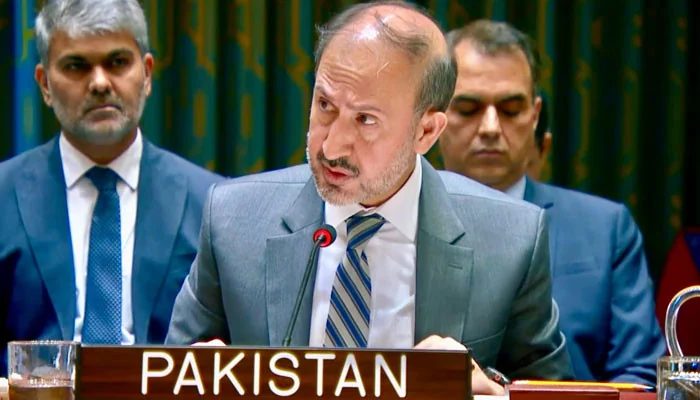
Pakistan urged the UN Security Council to set global guardrails on AI to curb an arms race, on November 25, 2026, in a meeting under Latvian presidency.
- Pakistan demanded human control over nuclear launch decisions.
- UN Secretary‑General called for a legally binding instrument on lethal autonomous weapons.
- AI has accelerated the spread of falsehoods and competition over critical minerals.
Pakistan Urges AI Guardrails
Ambassador Syed Haider Shah, Pakistan's permanent representative, addressed the 15‑member Council and warned that emerging technologies could supercharge the ongoing arms race. He urged the adoption of strict regulatory frameworks and confidence‑building measures to mitigate miscalculation and compressed decision‑making timelines. Shah stressed that nuclear launch decisions must remain under human control and that AI systems must never target nuclear command, control and communications (NC3) systems.
UN Chief Calls for Human Control
Secretary‑General Antonio Guterres opened the debate by noting that AI has entered the battlefield in troubling ways. He said algorithms increasingly shape life‑and‑death decisions, from intelligence gathering to target selection. Guterres reiterated that the decision to use nuclear weapons must rest with human beings alone and that "killer robots must have no place in our future." He urged the Council to launch negotiations for a legally binding instrument on lethal autonomous weapons systems.
AI in Warfare and Global Tensions
Guterres warned that AI has turbocharged the spread of falsehoods and driven an uncontrolled race fueled by commercial interests and geopolitical rivalry. He cited the rush for critical minerals and the massive energy and water consumption of AI data centres as factors inflaming tensions between communities and countries. The Secretary‑General called for confidence‑building measures, including direct communication channels, to prevent miscalculation and escalation. He added that concentration of power in a handful of countries and companies should worry all members of the international community.
Pakistan's envoy called for a comprehensive, inclusive forum under UN auspices to address the development and deployment of emerging technologies. He argued that all relevant issues should be taken up in representative and inclusive forums with universal participation. The Council's discussion highlighted the need for global cooperation to ensure that competition over emerging technologies does not destabilise international peace and security.