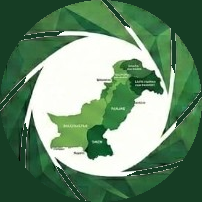
Pakistan today presents a striking paradox. Its relevance abroad is rising just as its political compact at home remains troubled. The world increasingly encounters a Pakistan that cannot simply be ignored or contained within the old categories of a security-dependent South Asian state. It has to be engaged: in diplomacy and security, certainly, but increasingly also in trade, technology, minerals, digital finance and the emerging new economy. Pakistan sits at the intersection of South Asia, China, Central Asia and West Asia, with the Arabian Sea opening outwards through its ports.
Long before the modern state existed, the territory that is Pakistan formed part of the great arteries through which people, commerce, faith and ideas travelled. The Silk Routes passed through this wider space; the Grand Trunk Road connected its cities eastward; Gandharan Buddhist civilisation flourished here; and centuries later Sufi traditions profoundly shaped its social and cultural landscape. Geography, though, is no longer Pakistan's only asset. It is the world's second-largest Muslim-majority country and possesses one of its largest youth populations.
Nearly two-thirds of Pakistanis are under 30. Pakistani doctors, scientists, teachers, bankers, engineers, athletes and technology professionals have distinguished themselves at home and abroad. ICT exports have been expanding rapidly: the State Bank recorded $3.8 billion in ICT services exports in FY2025, while the Pakistan Economic Survey reported another 19.7 per cent increase during July-March FY2026. New areas are opening. Pakistan now has an approved National Artificial Intelligence Policy. It has moved from ambiguity over cryptocurrency towards a statutory regulatory architecture for virtual assets.
Mining is also potentially transformative. Reko Diq alone is planned as a multi-decade copper-and-gold project, while the global contest over copper, rare earths and other critical minerals is enhancing the strategic importance of mineral-endowed states. The opportunity is therefore considerable. But potential is not power. A Pakistani software engineer can compete globally; Pakistan must build the ecosystem that allows thousands to do so. A Pakistani entrepreneur can excel individually; the economy must create conditions in which enterprise becomes normal rather than heroic.