
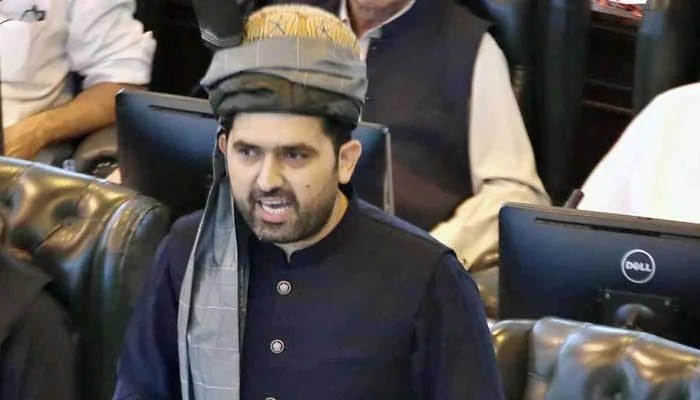
The Islamabad High Court (IHC) has put the Khyber Pakhtunkhwa chief minister on a constitutional tightrope ahead of the Pakistan Tehreek-e-Insaf's (Pakistan Tehreek-e-Insaf (PTI)) planned march towards Islamabad, making it clear that any public office-holder whose actions result in violation of citizens' fundamental rights in the capital would be deemed to have violated the Constitution as well as his oath of office. Interested quarters in Islamabad believe that the order, issued on Monday, carries particular significance for the KP chief minister as the Pakistan Tehreek-e-Insaf (PTI) prepares to mobilise towards the federal capital, placing direct responsibility on provincial governments and chief ministers to ensure that the machinery and resources of the state are not used to facilitate the march.
The court directed that no governmental resources, public funds or officials, directly or indirectly, be used, raised or made to participate in any march, procession or rally leading towards Islamabad Capital Territory. It also ordered provincial governments and chief ministers to ensure that no official vehicle, machinery or other equipment is used to aid or facilitate participants of such activities. The order further makes clear that no public servant can be compelled, coerced, induced or otherwise required to participate in a march or rally heading towards Islamabad.
However, it is the court's specific warning regarding public office-holders that gives the order its potentially far-reaching implications for the KP chief minister. The IHC has ruled that any person whose activity results in violation of the fundamental rights of citizens within the ICT shall be deemed to have violated the Constitution and shall be liable for consequences under law. More significantly, in the case of a public office-holder, the court has expressly held that such conduct would amount to violation of the Constitution and his or her oath of office under the Constitution, making the office-holder liable to consequences under the Constitution and law.
The order does not expressly state that a chief minister found in violation would automatically lose his office. But its reference to breach of the Constitution and the constitutional oath potentially exposes a sitting chief minister to constitutional consequences that could put his continuation in office at risk. The court has also directed chief secretaries and inspectors general of police of the provinces to establish mechanisms enabling government officials to report any coercion or inducement by political leaders or public office-holders to facilitate a march towards Islamabad.
Departmental action has also been ordered against officials violating the court's directions. For the KP chief minister, therefore, the order creates a particularly difficult constitutional balancing act: he remains a political leader of the Pakistan Tehreek-e-Insaf (PTI), but any attempt to use the provincial government, its resources or officials to facilitate the march could now have consequences extending beyond ordinary administrative proceedings and potentially putting his constitutional office itself at risk.