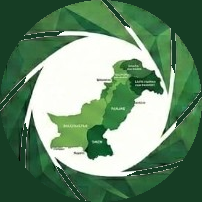
Pakistan's debate over administrative restructuring is not new. Demands for South Punjab, Bahawalpur, Hazara and other provinces have resurfaced over several decades and occasionally entered the formal legislative process. The Punjab Assembly adopted resolutions supporting South Punjab and Bahawalpur provinces in 2012, while a parliamentary commission proposed a new province in southern Punjab in 2013. Neither initiative produced a lasting constitutional settlement. This time, however, the debate appears to have acquired greater momentum. What was previously treated as a collection of regional demands is increasingly being discussed as a possible redesign of Pakistan's governance architecture.
Yet the debate has quickly settled into a familiar binary. One side argues that provinces containing tens of millions of people are too large, distant and centralised to govern effectively. The other responds that creating more provinces would merely multiply governors, chief ministers, assemblies, secretariats and bureaucracies without improving a single school, hospital or municipal service. Both sides identify a real risk. Neither offers an adequate route forward.
The concern about distance is legitimate. Punjab has more residents than many countries. Balochistan combines a vast territory with a dispersed population. Peripheral districts often experience the provincial capital as another remote centre. But drawing new boundaries will not, by itself, bring government closer. A new provincial capital can centralise power as effectively as Lahore, Karachi, Peshawar or Quetta.
Relying on existing provinces to empower local governments has also failed. Provincial governments have delayed elections, curtailed elected tenures, retained control over staff and budgets, and treated Provincial Finance Commission awards as discretionary exercises. Strong local government can reduce administrative distance, but it may not fully address demands rooted in regional identity, political representation or control over provincial policy. Devolution should therefore be the first stage of reform, but not necessarily the final answer.
Pakistan needs a time-bound pathway: protect local government, pilot meaningful regional autonomy and allow successful regions to proceed, where citizens support it, towards provincial status through a managed constitutional transition. The first step is to give practical meaning to the three tiers of government. Article 140A requires provinces to establish local governments and devolve political, administrative and financial responsibility to elected representatives. But it leaves the substance of devolution largely to provincial legislation.