
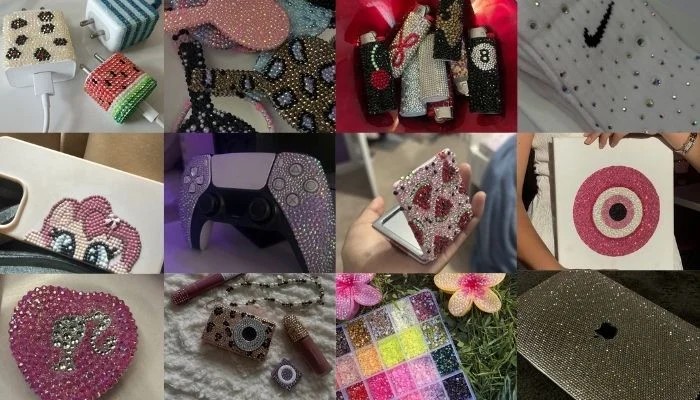
Scroll through TikTok or Instagram this year, and you will run into people adding 'whimsy' to their lives. This means intentionally introducing small touches of playfulness, imagination, and unexpected joy into your everyday routine. But what started as a soft trend has now converted into an entire shopping list. Water bottles covered edge to edge in stickers. Charm bracelets stacked with pastel clay beads. Phone cases, tumblers, hair clips, laptops, and even birthday cakes covered in glued-on rhinestones.
Google Trends data shows searches for 'bedazzle' hit their highest point in a decade in early 2026, and the aesthetic has since spread from clothing to cafe culture, beauty parlours, and everyday products. The names attached to the wider trend vary including 'clutter core,' 'sticker bombing,' 'shine-maxxing' but the method is the same everywhere: take a plain object and cover it with small, cheap, decorative pieces.
It looks harmless and aesthetically pleasing, but it is built almost entirely out of material that does not break down, and the objects underneath rarely get to keep their decorations for long before the next version of the trend replaces them. Look closely at what each piece is actually made of, and a pattern shows up: durability is the whole point, and durability is also the problem.
None of them shows up in official plastic-waste tallies, because a sticker, bead or rhinestone is too small and too ordinary to be tracked the way packaging or electronics are. But it accumulates in the same landfills and the same waterways as everything else. As reported by Statista, global plastic production has grown more than seven-fold in the past four decades to 360 million tons per year, and only around 9% of all plastic ever produced gets recycled; the rest is landfilled, incinerated, or lost to the environment.