
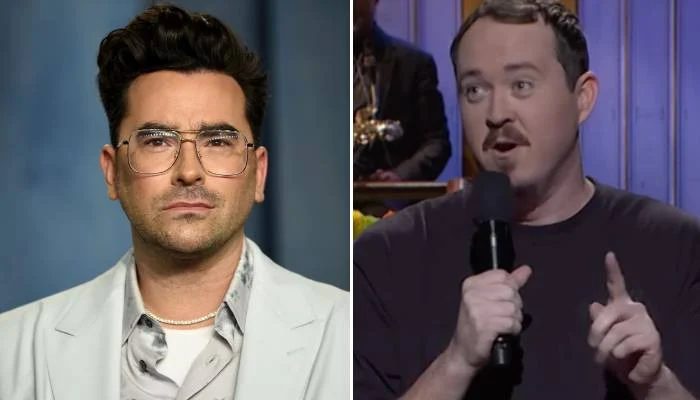
Dan Levy is calling out Shane Gillis for his "misogynistic" Saturday Night Live (SNL) monologue, and he wants other men to do the same. Taking to his Instagram on Sunday, October 11, the Schitt's Creek star criticised the comedian for saying that women dress like "wh*res" at the gym and drew attention to a wider problem.
"Women wearing short shorts to the gym does not make them wh*res. It makes the men calling them whores misogynists," he noted.
"There's a difference here." He argued that men need to speak up against this kind of rhetoric, warning that treating misogyny as a joke can contribute to a culture in which sexual assault is discussed rather than treated as a crime. "This is not a women's issue.
This is an everybody issue, because the more that men objectify women in the media, the more that other men see them as objects and treat them as objects," he said. "They are not objects.
They are superior human beings to men, OK? And I'm sorry if this gets me in trouble with the internet, but f***."
Gillis made the comment while hosting Saturday Night Live on October 10, sparking a wave of backlash from his colleagues and the internet alike. The incident has reignited debates regarding the boundaries of comedy and the responsibility of public figures when addressing gender-based stereotypes in mainstream media.
Levy's intervention highlights a growing trend where male celebrities are increasingly expected to hold their peers accountable for derogatory remarks. By framing the issue as a collective responsibility, Levy aims to shift the narrative away from passive observation toward active allyship.
The backlash against Gillis continues to grow, with various advocacy groups joining the conversation to demand higher standards for televised content. Critics argue that the platform provided by a show as prominent as SNL carries a significant weight that should not be used to normalize harmful language.
As the discourse continues, industry experts are questioning whether the network will issue a formal apology or if further disciplinary measures will be taken against the comedian. For now, the focus remains on the impact of such rhetoric on public perception.
Levy concluded his statement by reiterating that silence is no longer an option in the face of blatant disrespect. His message has resonated with thousands of followers, sparking a broader discussion on social media platforms about the necessity of respectful discourse in the entertainment industry.
The incident serves as a stark reminder of the power dynamics at play in modern media. Whether this leads to a permanent change in how comedians approach sensitive topics remains to be seen, but the pressure for accountability is clearly mounting.