
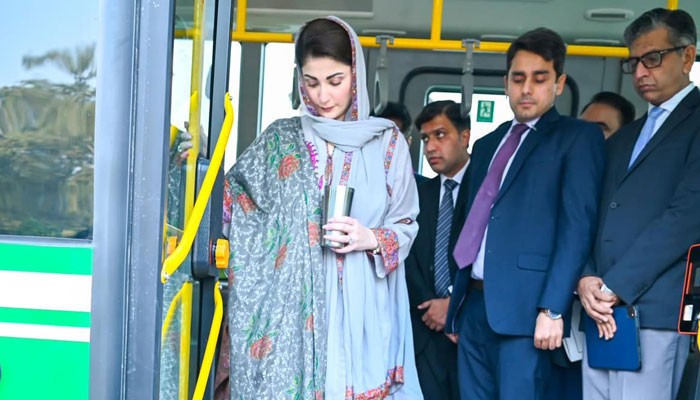
Punjab Chief Minister Maryam Nawaz's vision to extend modern and environment-friendly public transport to the grassroots level is being implemented, with the electric bus service at the tehsil level scheduled to commence from January 2027. Under the approved plan, 1,500 electric buses will operate in 91 tehsils of Punjab, while dedicated e-bus depots for each tehsil have been approved. The first batch of buses for the tehsil-level service will arrive in Lahore in January 2027.
Chairing a meeting here on Wednesday, the Chief Minister also approved additional electric buses for various districts, with a target to make 3,000 electric buses operational across Punjab by June 2027. The first phase of the expanded e-bus service was targeted for completion by September. Meanwhile, work on the Faisalabad and Gujranwala mass transit systems is progressing rapidly, while construction and rehabilitation of 25 stations of the Lahore Metrobus Service are also underway.
The expansion of the electric bus network is aimed at providing citizens with affordable, modern, safe, and environment-friendly public transport facilities at the tehsil level across Punjab. Meanwhile, Maryam Nawaz has directed the administration and relevant departments to intensify preventive measures against air pollution ahead of the smog season, with Lahore currently ranking 16th among the world's most polluted cities on the global air quality index.
She directed authorities to ensure comprehensive pre-emptive arrangements before the smog season expected in November and further strengthen the strategy that produced positive results last year. She also ordered strict action to control all major sources contributing to air pollution. Meteorological experts said slight fluctuations in the air quality index in Lahore, Faisalabad, Rahim Yar Khan, and other districts of Punjab were linked partly to changes in the direction of strong winds blowing from India.
They said rainfall expected in Lahore next week could help reduce the concentration of pollutants and improve air quality. They added that variations in wind speed and humidity affect the concentration of pollutants in the atmosphere, resulting in fluctuations in the air quality index. The Chief Minister directed the provincial administration and relevant departments to ensure the disposal of crop residue through modern machinery and prevent its burning.
She ordered effective measures to prevent the burning of plastic and mitigate the risks posed to human health by plastic products. The Chief Minister directed enhanced monitoring of motorcycle emissions in the city and strict action against vehicles found contributing to air pollution. She said monitoring through Safe City cameras, thermal imaging, and advanced artificial intelligence-based systems has also been expanded to identify and control sources of pollution more effectively.