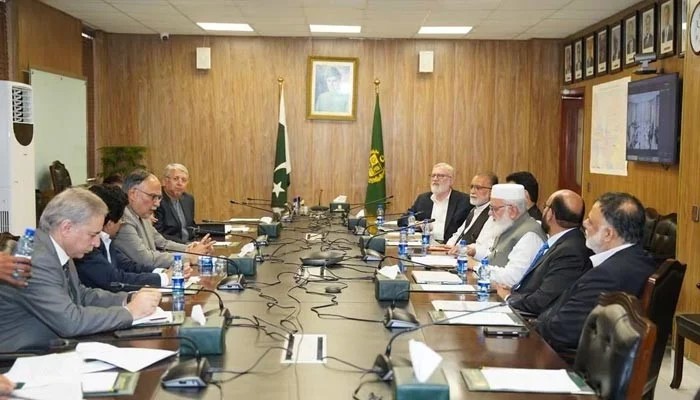
After talks with the government, Jamaat-e-Islami on Monday said it had submitted six proposals concerning the petroleum levy and would continue negotiations while keeping its protest ongoing. "The government had collected more revenue from the petroleum levy than the target set in the budget," Jamaat-e-Islami leader Liaquat Baloch said while speaking to journalists after holding negotiations with a government team. Federal Minister for Planning Ahsan Iqbal leading the delegation met a Jamaat-e-Islami delegation in Islamabad to discuss the petroleum levy and rising petrol prices, according to a statement.
The meeting was attended by senior officials, including PM's Adviser Rana Sanaullah, Petroleum Minister Ali Pervaiz Malik and Bilal Azhar Kiani. The meeting was held after Jamaat-e-Islami's nationwide strike against the petroleum levy and inflation, which received a mixed response as markets and shops partially closed in parts of Sindh and Khyber Pakhtunkhwa (KP), while businesses largely remained open in Punjab and Balochistan. The party has also been holding sit-ins for more than 20 days in provincial capitals and other cities as part of its campaign against the petroleum levy and rising inflation.
Iqbal, while talking to journalists after meeting, said the government had sought suggestions from Jamaat-e-Islami, adding that no government wanted protests to take place in the country. He said the government sometimes faced difficulties, but Jamaat-e-Islami's proposals would be forwarded to the relevant ministries for consideration. "Everyone is concerned about the public interest," Iqbal said, adding that the government did not want to place an additional burden on the people.
He said the government would be pleased if relief could be provided to the public in any way. For his part, Jamaat-e-Islami leader Baloch said the party had presented six proposals to the government and that the government would review them, adding that it had sought three days to consider the suggestions. Baloch said negotiations were the ultimate solution and the party also understood that protests were not a solution, while welcoming the fact that the government had given priority to dialogue.