
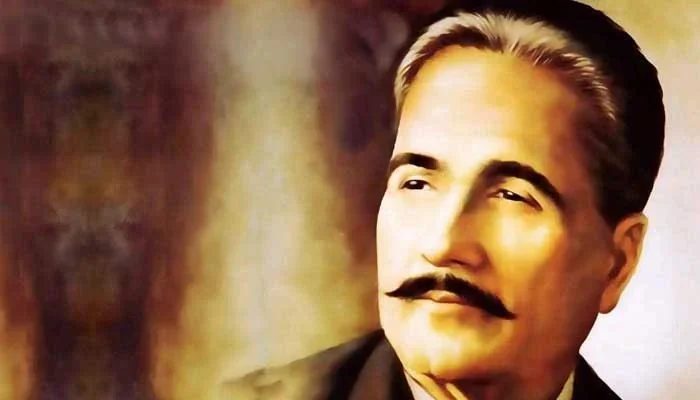
Allama Iqbal could never have imagined that the city where, in 1930, he called for a separate Muslim state in India would one day have its Muslim name erased, vindicating his fears about Muslim identity. Every year on November 9, Pakistan observes Iqbal Day, and the Allahabad Address is invariably mentioned, as it earned Iqbal recognition as the originator of the idea of Pakistan.
On December 29, 1930, the annual session of the All India Muslim League met in Allahabad, Uttar Pradesh. In his presidential address, Iqbal argued that the Hindu leadership had colluded with British imperialism, that this collusion threatened the very existence of Islam and Muslims, and that Muslims would have to establish a separate state to confront it.
That state came into being in 1947 as Pakistan. Today, however, India's extremist Hindu leadership not only wishes to wipe out Pakistan but also seeks to destroy the religious identity of hundreds of millions of Indian Muslims.
Uttar Pradesh Chief Minister Yogi Adityanath is notorious for his hostility to Islam and his demolition of mosques. He has not only renamed Allahabad as Prayagraj; some time ago, in a speech to the Uttar Pradesh Assembly, he also blamed Iqbal for the partition of India and attacked him.
The recitation of Iqbal's famous poem "Bachche ki Dua" (A Child's Prayer) has been banned in the state's government schools, even though the poem does not condemn Hindus anywhere. Banning Iqbal's poems in Indian schools, or removing him from university curricula, does nothing to diminish the stature of the Poet of the East.
On the contrary, it shows that Iqbal was a great benefactor of the Muslims of this region. He abandoned "Tarana-e-Hindi" (Anthem of India) and wrote "Tarana-e-Milli" (Anthem of the Muslim Community) precisely because, in 1930, he had foreseen the threat to Muslims that the whole world can now see in the anti-Muslim policies of Narendra Modi in 2026.
The irony is that while India's Hindu extremists hate Iqbal simply because he proposed a separate Muslim state in the Allahabad Address, some Pakistani intellectuals, consciously or unconsciously, keep spreading confusion about that address in order to sever Iqbal's link with the idea of Pakistan.
Yesterday evening, a teacher from Quaid-i-Azam University, Islamabad, sent me an article by Yusuf Nazar, a London-based banker, published on October 29, 2026. He insisted that a rebuttal was essential, because yet another attempt had been made to break the connection between Iqbal and the idea of Pakistan.
After glancing at the article, I told him it contained nothing new: it merely retells the story of Iqbal's debate with Edward Thompson, a subject on which I had shared my views only a few days earlier. When he persisted, I asked, "Why don't you write the response this time?" "We are government employees," he said.
"If I highlighted the real spirit of the Allahabad Address, my job would be at risk." "How so?" I asked. "You know that the address identified not only the collusion between British imperialism and Hindu extremism as a threat to Muslim identity, but also Arab monarchy.
Professor Fateh Muhammad Malik lost the rectorship of the International Islamic University after speaking on this subject. I will not take that risk." It is sad that in Iqbal's Pakistan, it has become difficult for professors to defend him.