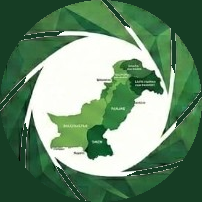
Pakistan's debate over creating more provinces has returned with unusual force. Interior Minister Mohsin Naqvi first declared that the existing governance system had "collapsed" and called for new provinces or administrative units. More recently, he doubled down, saying that new administrative units would eventually have to be created.
The diagnosis deserves attention. Pakistan does suffer from weak governance, poor public services, over-centralisation, fiscal stress and governments increasingly disconnected from citizens. But the proposed cure rests on the doubtful assumption that these failures exist because Pakistan has too few provinces.
If the problem is bad governance, drawing more lines on the map does not automatically produce better government. It can simply reproduce the same weaknesses in smaller jurisdictions, while also adding another layer of political, administrative and fiscal cost. It is important to acknowledge that the case for new provinces is not entirely frivolous.
Southern Punjab has long complained of uneven development. Balochistan's size makes administration difficult. Karachi's infrastructure and public services fall far short of a megacity's needs.
Many citizens also understandably feel distant from provincial capitals. But these are symptoms of weak governance and inadequate devolution, not proof that constitutional surgery is the answer. This 'cure' might only end up aggravating the disease.
A province is not an administrative district. It requires a governor, chief minister, cabinet, provincial assembly, chief secretary, inspector general, secretariat, ministries, departments, residences, staff, security, vehicles and, eventually, pensions. Multiplying the number of provinces would permanently expand the political and administrative state at a time when Pakistan desperately needs to reduce the cost of government.
Debt servicing already consumes an extraordinary share of federal resources, development spending is repeatedly squeezed, and taxpayers face an ever-heavier burden. Provincial budgets are dominated by recurring expenditure. In such circumstances, multiplying provincial establishments is difficult to reconcile with fiscal reality.
Pakistan does not suffer from too little government but from too much of the wrong kind. The country's institutional weaknesses include weak accountability, political interference, fragmented authority, an oversized bureaucracy, duplication between federal and provincial governments, poor rule of law and almost no meaningful performance management. But would creating more provinces improve election quality, strengthen parliament, professionalise the civil service, boost exports, reduce trade and current account deficits, enhance tax collection or improve regulation and public financial management?
Would it make institutions more independent or governments more accountable? If not, then changing the map is not reform. It simply rearranges the same problems and may even compound them.
The experience after the 18th Amendment is instructive. Major responsibilities were devolved from the federation to the provinces, but the restructuring was never completed. The federal government still maintains ministries and institutions in substantially devolved areas, while provinces have often resisted meaningful political, administrative and financial devolution below the provincial level.
Article 140A already requires provinces to establish elected local governments and devolve political, administrative and financial responsibility to them. Any reform agenda should therefore focus on making the federation smaller and more strategic and provincial governments leaner and more professional. Eliminating duplication, rationalising ministries and departments, digitising government, strengthening regulatory and oversight institutions, judging expenditure by outcomes and devolving authority where the constitution already requires it is governance reform.
Creating more governments before fixing the ones we have is not. Pakistan's provinces are also not mere administrative conveniences. They are constituent political units of the federation and carry historical identities that predate Pakistan itself.