
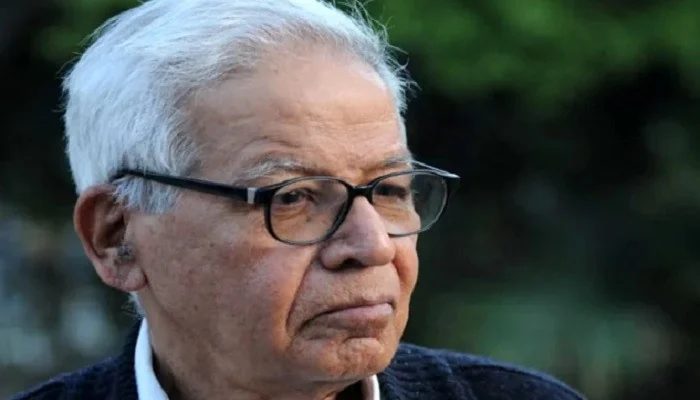
Veteran Pakistani journalist and human rights activist Syed Hussain Naqi passed away in Lahore on Sunday.
- Syed Hussain Naqi passed away on Sunday after a career spanning over six decades of journalism and human rights activism.
- He began his activism in student politics during the 1960s with the Karachi University Students Union and the National Students Federation.
- He worked for numerous publications including Pakistan Press International, Viewpoint, and The Frontier Post.
The octogenarian writer was widely regarded as a fearless and honest public-interest journalist who abhorred duplicity and never minced words. Just a night before his passing, he told individuals seeking change at a book launch press conference that democracy required sacrifices. Such was the impact of his words that an attendee remarked afterward that Naqi Sahib's age and illness were his only protection against state retaliation.
Early Activism and Student Politics
Born in Lucknow, India, he moved to Pakistan in 1950 as a teenager with family members while his parents remained behind. His rights activism began early in student politics during the 1960s. He opposed Field Marshal Ayub Khan's martial law regime while involved with the Karachi University Students Union and the National Students Federation. His persistent protesting against the expulsion of Baloch students led to his rustication from the university and externment from Karachi to maintain peace and safety. He subsequently migrated to Lahore, where he studied at the University of the Punjab and officially launched his journalism career.
Journalistic Career and Imprisonment
His long and arduous journalistic journey saw him repeatedly find and lose jobs due to his refusal to mix facts with fiction. Hussain Naqi worked for Pakistan Press International, Viewpoint, Holiday, Outlook, Frontier Post, Frontier Guardian, Daily Star, Punjab Times, Punjab Punch, and The Muslim. Contemporaries often shared stories of how Naqi found himself on the wrong side of successive governments, ranging from Ayub Khan's martial rule to the government of Zulfikar Ali Bhutto. He faced imprisonment and expulsion from Sindh as his reporting and political stances directly clashed with the authorities.
Throughout his career, he consistently campaigned for the rights of farmers, laborers, and oppressed communities. Within the media industry, he championed the economic and professional rights of working journalists while actively opposing state censorship and press advice practices.