
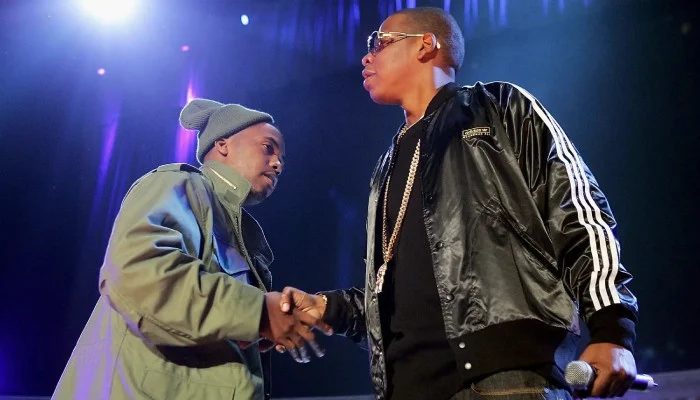
Jay-Z and Nas went from hip-hop rivals to good friends, but their infamous feud may have started with something as simple as a missed studio session. In the latest episode of the JAŸ-Z in 8 docuseries, which aired on October 9, the rapper, 56, revisited his complicated history with Nas, 53, admitting that their rivalry was more about competition than genuine hatred.
Jay-Z traced the tension back to their early careers, when both rappers were making their mark in the '90s. But one alleged no-show left him unimpressed.
"I'm not really a guy like that, you just say you coming and don't come. Can't count on him, not gonna ask him ever again.
That was that, never asking him again. But not a problem, we don't have a problem," he recalled.
Things eventually escalated after Jay-Z perceived shots at him on Nas' second album. What began as competition turned into an all-out lyrical battle, though Jay-Z stressed there was no violence involved.
"It got personal, but it wasn't really personal," he explained, adding that the two have since become "really good friends." Jay-Z also credited their rivalry with pushing both artists to work harder. "To his credit, he really rose to the occasion," he said of Nas, suggesting the competition may have motivated his rival to release music more consistently.
"For me, I was rolling at the time. This is Blueprint, Vol. 2 era, I was selling five, six million records, going on tour, I was unstoppable.
It definitely kept me sharp in that space." The pair eventually reunited on DJ Khaled's 2022 track "Sorry Not Sorry." Khaled previously revealed that seeing them enjoying each other's company at a dinner gave him the courage to bring them together.
From a missed studio session to one of hip-hop's most famous rivalries, their story proves that even rap beef can have a surprisingly happy ending. The industry has long speculated about the roots of this conflict, but Jay-Z's candid admission provides a rare glimpse into the mindset of two legends who defined an era of music.
Fans have praised the maturity shown by both artists in recent years, noting that their reconciliation serves as a positive example for younger generations of musicians. As both artists continue to influence the culture, their ability to move past historical grievances remains a testament to their professional growth and mutual respect.