Before watching Main Vaapas Aaunga, I knew it was a film about Partition and love. After watching it, I realised it was also a story about memories that never leave us. I had been waiting to watch the film since its trailer was released. An Imtiaz Ali film about the partition, a lost love, and Sargodha immediately caught my attention. I had also been listening to its songs repeatedly, so by the time I finally watched it, I was already emotionally connected to the film.
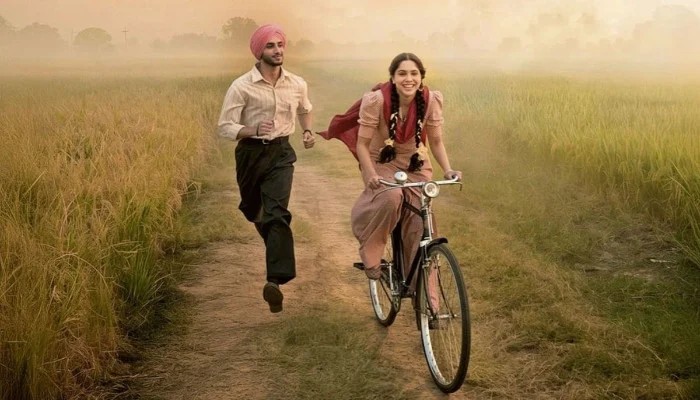
At its heart, Main Vaapas Aaunga is a story about Ishar Singh Grewal, also known as Keenu, whose memories of the love he lost during Partition remain with him decades later. Naseeruddin Shah plays the elderly Ishar, while Vedang Raina portrays him during his younger years. Sharvari plays Afsana, also known as Jiya, the woman he loved, while Diljit Dosanjh plays Nirvair, Ishar's grandson, who tries to understand the memories his grandfather struggles to communicate. The film, directed by Imtiaz Ali and written by Ali and Nayanika Mahtani, moves between generations to tell a story about love, memory, migration, and belonging.
What stayed with me most was the way the film looks at the partition through ordinary people. It is not simply about the creation of two countries. It is about people leaving behind their homes, relatives, friends, schools, villages, and entire lives. Some of the partition scenes are extremely difficult to watch. The violence on trains, the bloodshed, and the choices families were forced to make show how painful that period was. The film does not allow us to see the partition simply as a migration from one side of the border to the other.
It was a human tragedy, and that is where the film became personal for me. I spent 4 years of my childhood in Sargodha because my father was posted there. Some of my best childhood memories are connected with the city - my friends, school days, and the years I spent growing up there. But my connection with the partition goes beyond Sargodha. My grandfather also witnessed the partition. He was born in 1933 and was 13 when the partition happened in 1947. I spent a lot of time with him before he passed away in 2023 at the age of 89.
Whenever we spoke about the partition, I could see the emotion in his eyes. Sometimes he would become quiet, sometimes emotional. Those moments taught me that for people who actually lived through the partition, it was never just a chapter in a history book. They left behind homes, relatives, friends, and memories that could never simply be replaced. That is why Main Vaapas Aaunga affected me differently. The film reminded me that the people who survived the partition carried those memories with them for the rest of their lives.
For younger generations, the partition can feel distant. We read about it, watch documentaries, and hear stories from our grandparents. But for those who lived through it, the pain was real and personal. I also appreciate Imtiaz Ali for bringing this story back to human emotions. I have followed his work for years, from Jab We Met and Rockstar to Tamasha and Amar Singh Chamkila. What I admire about him is his ability to explore familiar emotions through different worlds. With Main Vaapas Aaunga, he brings love and longing into one of the most painful chapters of our history.