
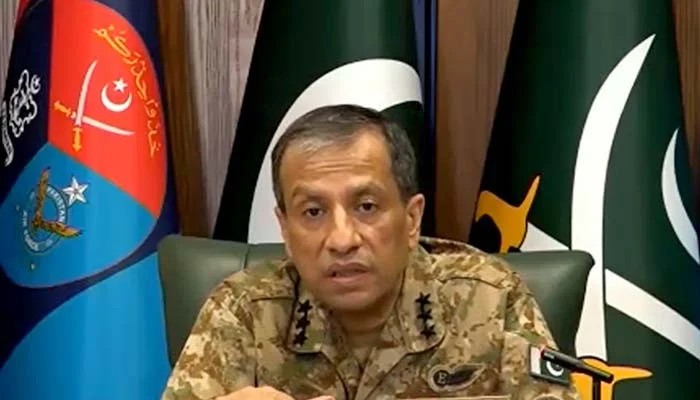
Chief military spokesperson Lt Gen Ahmed Sharif Chaudhry has described the Makkah Joint Defence Agreement between Pakistan, Saudi Arabia and Turkiye as defensive, saying the pact has no "regional aspirations". "It is defensive, as the word also implies. There's nothing aggressive. There are no regional aspirations. It is a collective deterrence," said Lt Gen Chaudhry, Director-General of Inter-Services Public Relations (ISPR), in an interview with Al-Arabiya English on Wednesday.
The Makkah trilateral agreement - signed between Islamabad, Riyadh and Ankara on August 7 - provides for collective security and defence cooperation among the three states. The question about a response under the Makkah defence pact arose amid Yemen's Houthis attacks on Saudi cities and energy infrastructure, becoming a second theatre of war in the Middle East.
Responding to a question, the ISPR chief called the joint security pact "complementary", saying that member countries of the pact had independent relations with other alliances, countries and blocs. "So this mutual defence agreement is complementary in nature. It is not competing with any other relationship of all these countries with each other," he explained.
When asked how Pakistan would respond if any member of the pact came under attack, Lt Gen Chaudhry said operationalisation details of the defence agreement are classified, and they are never made public. "You see, you have multiple other agreements which are defensive in nature and committal in nature. But if you see, no country comes out and starts sharing its operational details in any military, because what you're asking is the 'how part' of how we are going to defend Pakistan against any aggression. I think that is always part of the operational classification and security."
"So no country does that. So even so, what you're asking is how it will be done. It is for the three countries to decide, and it is for them to know and for them to actualise it." This is a developing story and is being updated with more details.