
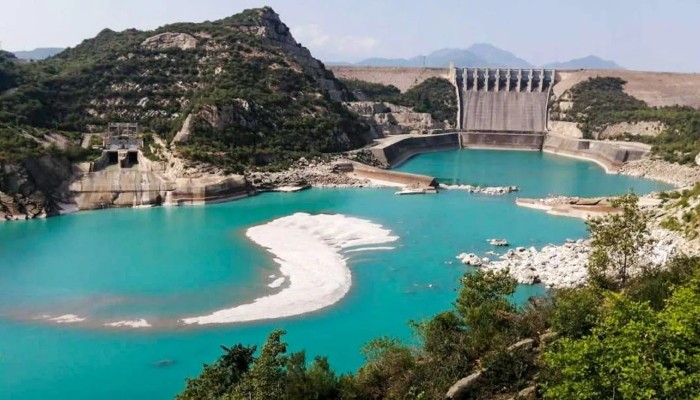
Mangla Dam, Pakistan's largest water reservoir and a vital lifeline for the national wheat crop, failed to reach its maximum conservation level during the high-flow Kharif season. The deficiency in storing enough water for upcoming lean-flow Rabi months has exposed systemic management failures across the water management entities. As inflows from the Jhelum River diminished at the close of the storage cycle, Mangla Dam fell 20 feet short of its 1,242-foot maximum conservation level.
This shortage represents a massive loss of 1.6 million acre-feet (MAF) from the reservoir's total storage capacity of 7.3 MAF, leaving it with only 5.7 MAF available at a critical juncture when the country requires every drop for the upcoming Rabi season. This severe storage gap directly diminishes carryover reserves and heightens the country's vulnerability to severe agricultural water shortages during the Rabi season, which is expected to face warmer temperatures and drought conditions driven by the super El Niño phenomenon.
The emerging crisis threatens the cultivation of the country's strategic wheat crop due to the lack of sufficient irrigation supplies from Mangla. Paradoxically, this shortfall occurred during a Kharif season that saw healthy river flows and flood-like conditions in the Indus and Chenab rivers, which resulted in over 8 MAF of water escaping unused into the sea downstream of Kotri Barrage. The root cause of this poor water management stems from flawed administrative execution rather than natural hydrology.
Prolonged construction work on the tunnel structures at Tarbela Dam on the Indus River forced WAPDA to maintain an operating level of 1,432 feet during a period of high irrigation demand. According to WAPDA's own data, approximately 0.5 MAF of water remained physically available between that elevation and dead level for irrigation but could not be released. Because consultants determined that trial runs of the reconstructed tunnel could not be conducted under current hydrological conditions, maintaining the mandatory water level was dragged late into the Kharif season, severely restricting outflows from Tarbela when provincial demand was highest.
These restricted outflows from Tarbela forced IRSA to drain Mangla Dam right from the onset of its filling cycle to satisfy downstream agricultural needs. IRSA raised releases from the Jhelum River from 15,000 cusecs to 35,000 cusecs in the month of April, eventually escalating outflows to a staggering 65,000 cusecs the next month because inflows from the Chenab River at Marala Headworks were also not properly utilized to meet demand.
This heavy early reliance on Mangla severely undermined estimates and plans to fill the reservoir to capacity. Compounding the problem, poor regulation by the Punjab Irrigation Department cost Mangla Dam up to an additional 0.5 MAF of storage. During the late Kharif period, the department failed to reduce outflows from the dam despite high inflows in the Chenab River and adequate flows at Rasul Barrage generated by hill torrents.
Instead of following the established practice of cutting Jhelum outflows to as low as 5,000 to 6,000 cusecs during critical filling windows, the department maintained releases at up to 9,000 cusecs, allowing precious water to escape unnecessarily beyond actual irrigation requirements. It seems that irrigation officials have not prioritised the filling of Mangla Dam as they appear less sensitized to the urgency of its filling for ensuring national food security.