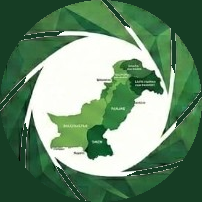
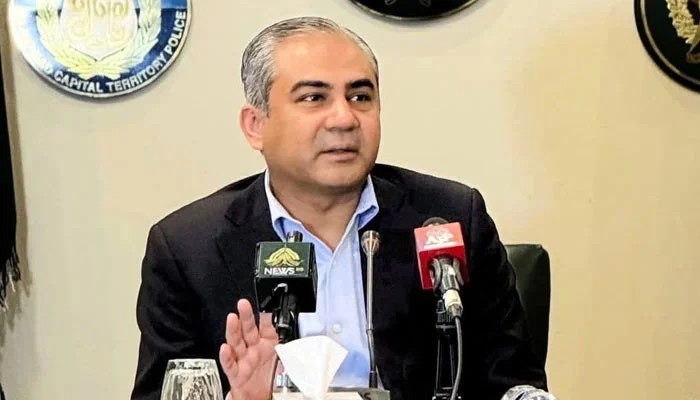
Interior Minister Mohsin Naqvi's call for seeking the people's consent on the creation of new provinces or administrative units has sparked speculation that it is a hint that a referendum could be used to determine the future shape of Pakistan's federating units. Although, Naqvi did not explicitly use the word "referendum" in his recent remarks, his proposal that a draft plan for new administrative units be presented to the people and their opinion sought has been widely interpreted as a possible reference to a popular vote.
Speaking at the National Policy Dialogue in Lahore, a couple of days back, Naqvi said no restructuring of the country's administrative system should be imposed by an individual, political party or government. "Most importantly, our parliament, experts and those people responsible for it should debate on it and, finally, we must seek our public's opinion," he said. He further suggested that a proposal could be drafted and presented to the people, asking them whether they accepted it or not.
The remarks are significant because the Constitution itself provides a mechanism for a referendum on a matter of national importance. The Article 48(6) says that where the prime minister considers it necessary to hold a referendum on any matter of national importance, he may refer the matter to a joint sitting of parliament. If the joint sitting approves the proposal, the matter may be referred to the people in the form of a question capable of being answered by "Yes" or "No".
The provision, however, does not expressly provide that a referendum can itself create a new province or alter the constitutional boundaries of an existing province. The Article 239(4) and (5) lays down a specific procedure for constitutional amendments affecting provincial boundaries. An amendment having the effect of altering the limits of a province cannot be passed without the required parliamentary majorities and cannot be presented to the president for assent unless it has also been passed by the concerned provincial assembly by votes of not less than two-thirds of its total membership.
Constitutional experts wonder whether the general power to hold a referendum under Article 48 can override the specific constitutional procedure prescribed for changing provincial boundaries. The distinction between new provinces and administrative units is also likely to become central to the debate. While the creation of a new province would necessarily involve constitutional and territorial questions, the federal or provincial governments could potentially create lower-level administrative arrangements without altering the federation's constitutional structure.
Naqvi, who is known for his close association with the top military establishment, however, has deliberately kept the proposal broad, referring to both new provinces and administrative units. The debate is no longer confined to whether Pakistan needs more provinces or smaller administrative units. It has also moved to a fundamental constitutional question whether the people's opinion, through a referendum, provides the political mandate for restructuring the federation, or must any change in provincial boundaries necessarily pass through the constitutional route involving parliament and the concerned provincial assembly?