
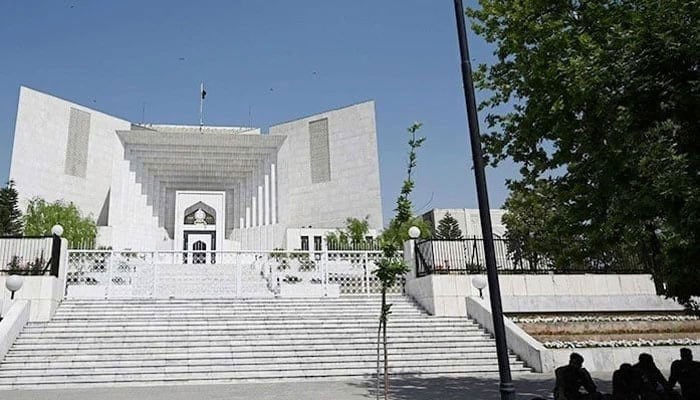
The Supreme Court has held that for the purposes of customs tariff classification, a vehicle's original design and manufacturing specifications are of primary importance. A three-member bench headed by Chief Justice Yahya Afridi on Wednesday ruled that a vehicle originally manufactured to carry five passengers does not become a vehicle designed to transport 10 or more persons - falling under PCT Heading 87.02 - merely because its structure is subsequently modified to add more seats.
Instead, the court noted, such a vehicle remains classifiable under PCT Heading 87.03. The bench clarified that the mere presence of additional seats at the time of importation does not alter the vehicle's original manufacturing character and design. Modifying a passenger car to accommodate extra seating after production does not change its legal and technical classification under customs laws.
Setting aside the Peshawar High Court's decision, the apex court made it clear that a vehicle's customs classification depends on its original design and manufacture rather than subsequent alterations. The judgment emphasized that regulatory authorities must adhere to the fundamental engineering blueprints and manufacturing intent when determining tariffs and duties on imported vehicles.
Legal experts believe this ruling will provide much-needed clarity for importers and customs authorities in resolving long-standing classification disputes. The decision ensures consistency in the application of customs tariff codes across all ports of entry in the country, preventing potential misuse of duty exemptions or misclassification of motor vehicles.