
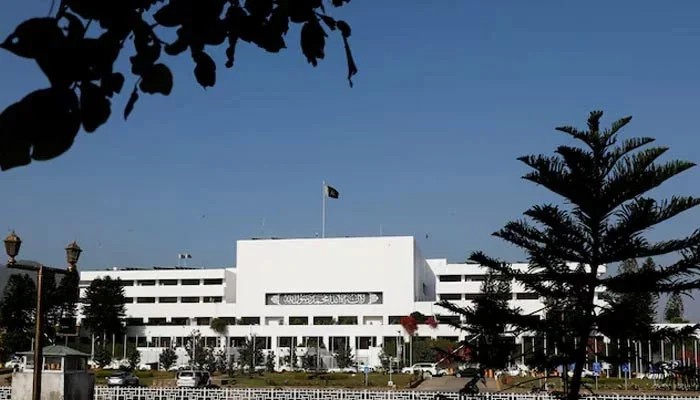
A high-powered committee constituted by Prime Minister Shehbaz Sharif and led by Minister for Planning Ahsan Iqbal has finalised almost 20 major recommendations for a new governance model in the Islamabad Capital Territory (ICT), based on devolution of powers from the federation to the ICT as a federating unit. The committee shared its recommendations with the prime minister, proposing an elected ICT Government (ICTG), a representative legislature and provincial-style departments, while retaining federal control over law and order and master planning.
Under the proposed model, the ICT Assembly (ICTA) would comprise 27 members - 21 directly elected, five women on reserved seats and one minority member. Each National Assembly constituency in the ICT would have seven ICTA constituencies. Articles 62 and 63 of the Constitution would apply to ICTA members, while elections would be held by the Election Commission of Pakistan. The ICTA would elect a leader, to be called the chief minister/mayor, who would serve as the chief executive of ICTG and remain accountable to the assembly.
The committee proposed that ICT departments be organised on the pattern of provincial departments, though fewer in number, and grouped under the rules of business. All departments would function under the ICTG, except law and order and master planning, which would remain under the federal government through the relevant federal minister or a governor of ICT. Except for master planning, all functions of the Capital Development Authority (CDA) would be transferred to the ICTG.
The proposed ICTG would have a chief secretary, replacing the existing chief commissioner, and four secretaries heading the departmental groups. The committee recommended a single legal framework - the Islamabad Capital Territory Government Act 2026 - incorporating the required provisions, subject to necessary constitutional amendments. Following approval, a legislative committee would be constituted to draft the required legislation, while a separate finance committee would oversee resource allocation from the federal government.