
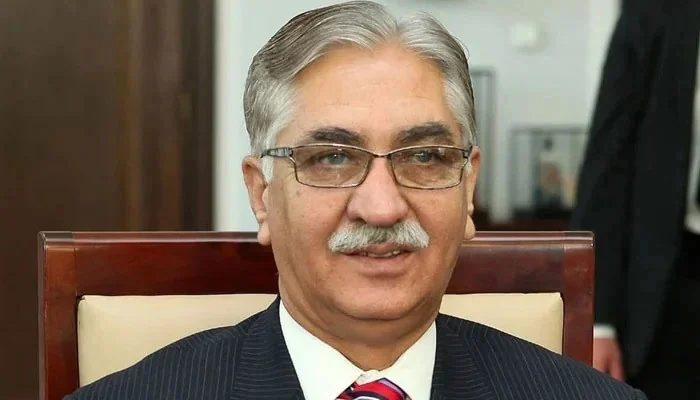
Pakistan Peoples Party Secretary General Nayyer Hussain Bukhari demanded Prime Minister Shehbaz Sharif clarify the government's stance on new provinces in Islamabad on Saturday.
- Pakistan Peoples Party (PPP) accepts new provinces if within constitutional framework.
- Prime minister urged to present unified stance.
- President Asif Zardari praised for conciliatory role.
Pakistan Peoples Party (PPP)'s Position
Secretary General Nayyer Hussain Bukhari stated that the Pakistan Peoples Party (PPP) had no principled objection to the creation of new provinces, but would not accept any move outside the constitutional framework. He said the authority to decide on new provinces, including holding a referendum, rested with parliament rather than commercial groups or non‑parliamentary forums.
Statement on Bilawal Bhutto
Bukhari added that Pakistan Peoples Party (PPP) Chairman Bilawal Bhutto had clearly articulated the party's policy and possessed every democratic and political right to express his position and respond to government decisions. He criticised the party's fundamental objection to raising the issue before commercial groups instead of discussing it in cabinet and parliament.
Call to Prime Minister
He urged Prime Minister Sharif, as head of government and cabinet leader, to take his ministers into confidence, clarify the government's position and bring the matter before parliament. Bukhari said contradictory statements by ministers for interior, planning and defence had made it necessary for the prime minister to announce a clear and unified government position.
Constitutional Route
Pakistan Peoples Party (PPP) demanded the government clarify whether it intended to pursue a constitutional route or adopt a course outside the constitutional framework. The party reiterated its commitment to constitutional supremacy, parliamentary sovereignty and democratic continuity, and called for the incumbent government to complete its constitutionally mandated tenure.
President Zardari's Role
Bukhari welcomed recent meetings between President Asif Zardari and Prime Minister Sharif, describing the president's conciliatory role as historically significant in the prevailing circumstances. He praised Zardari for working to build political consensus.
Response to Rana Sanaullah
When Rana Sanaullah issued political threats, Bukhari advised him to approach relevant constitutional forums, including the speaker of the National Assembly or the Election Commission, instead of issuing threats. He said Pakistan Peoples Party (PPP) could not be intimidated by such threats and clarified that a simple majority and a broader majority were distinct concepts.
Electoral Disputes
Referring to the debate over figures of 47 and 45 following the 2024 general elections, Bukhari said electoral and parliamentary disputes should be resolved through constitutional forums. He maintained that the party upheld a democratic and people‑oriented tradition.
Rights of Political Parties
Despite political differences, Bukhari stressed that constitutional rights of all political parties and their leaders, as well as the right to a fair trial, must be protected. He noted that Pakistan Tehreek-e-Insaf (PTI) founder Imran Khan, as the head of a political party, was also entitled to a fair trial.