
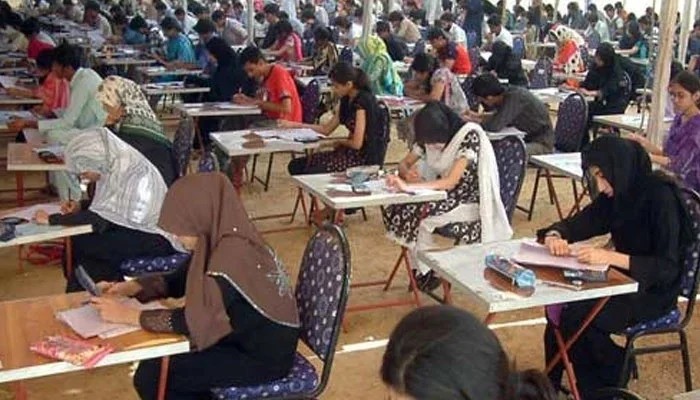
The Establishment Division has rejected proposals to increase the upper age limit for appearing in the Central Superior Services (CSS) examination from 30 to 35 years and to raise the number of attempts from three to five, deciding to retain the existing policy. According to an official document, the Sub-Committee of the Senate Standing Committee on Cabinet Secretariat had recommended increasing the upper age limit for the CSS examination from 30 to 35 years. The Senate Standing Committee had also proposed increasing the number of attempts from three to five.
In its written position submitted to the parliamentary committee, the Establishment Division termed the recommendations of the sub-committee impractical and said that any increase in the age limit or number of attempts for the CSS examination fell within the policy domain of the federal government. The division said the Federal Public Service Commission (FPSC) merely implements the policy approved by the federal government. It added that the FPSC, during its 174th meeting, had also decided to retain the existing policy.
The Establishment Division maintained that the current age limit and number of attempts represented an appropriate balance. It cautioned that raising the upper age limit could result in a significant increase in the number of CSS candidates, placing an additional burden on the conduct and administration of the examination as well as the checking of answer scripts. The division also argued that allowing more attempts could lead some candidates to repeatedly sit the examination for several years, potentially causing them to lose their productive years.
According to the written position, candidates entering the civil service at a relatively advanced age would have a shorter effective period of service. Increasing the age limit could also affect the long-term availability of experienced officers for senior government positions. The Establishment Division further pointed out that an increase in the age limit could disproportionately benefit candidates who had the financial means to afford prolonged preparation for the highly competitive examination. It said the state could ultimately receive fewer years of service from officers recruited at a higher age, while some officers could begin field assignments at the age of 37 or 38, leaving them with less than 25 years of effective service before retirement.