
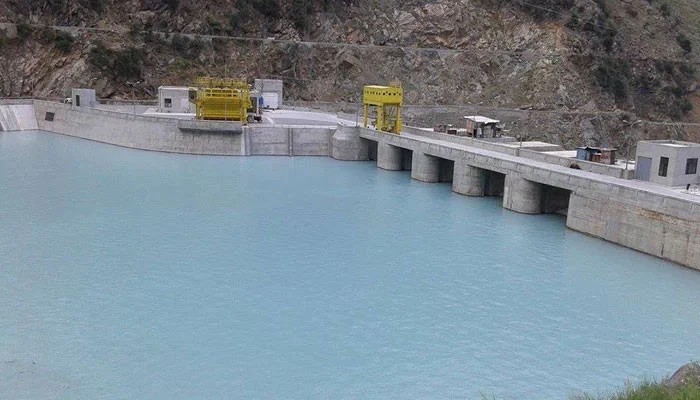
Water inflows into the river system have dropped by 38.01 per cent during the ongoing Kharif season from 431,000 cusecs to 267,700 cusecs, even as authorities have managed to retain 11.6 million acre-feet (MAF) of water in the reservoirs. The current storage represents 88.22pc of the country's combined reservoir capacity of 13.149 MAF, according to the water data available on September 6. Tarbela Dam, which reached its maximum storage level of 5.580 MAF on August 9, is currently operating on a run-of-the-river basis, with inflows and outflows both recorded at 164,500 cusecs. Mangla Dam, meanwhile, has accumulated 5.733 MAF against its total storage capacity of 7.258 MAF. Reduced flows in the River Jhelum have prevented the reservoir from reaching its maximum level.
The latest data shows total inflows at 267,700 cusecs against outflows of 256,600 cusecs. The four provinces are currently receiving a combined 298,700 cusecs, including 134,100 cusecs for Punjab, 150,000 cusecs for Sindh, 2,600 cusecs for Khyber Pakhtunkhwa and 12,000 cusecs for Balochistan. Since April 1, around 8.601 MAF of water has been released downstream of Kotri to help curb sea intrusion and protect the delta and coastal areas of Sindh. An Indus River System Authority (Irsa) official said compared to the average inflows recorded during the monsoon over the past 10 years, inflows this year had remained below average.
Asked whether Pakistan would have sufficient stored water to meet irrigation requirements during the Rabi season, which begins on October 1, the official said it would depend largely on how much water is drawn down from the reservoirs until the maturity of Kharif crops. He also drew attention to the late sowing of Kharif crops, mainly because of delayed arrival of inflows in rivers and reservoirs. As a result, the Kharif season may extend, meaning that water drawdown from the reservoirs could continue for a longer period to meet crop-maturity requirements. "We also need to assess the surplus water available in nullahs, streams and rivers as a result of the floods," the official said.
Throughout September, water drawdown from the reservoirs will continue until the Kharif crops mature. The water carried over in the reservoirs, along with the water remaining in streams, nullahs and rivers, will ultimately determine the quantity of water available for the Rabi season. At Chashma, storage stands at 0.285 MAF against a capacity of 0.311 MAF. In the Jhelum River at Mangla, inflows have declined to 20,100 cusecs while outflows are being maintained at 9,000 cusecs. Officials attribute the slower filling of Mangla partly to weak hydrology in the river. Meanwhile, inflows in the Chenab River at Marala were recorded at 52,300 cusecs, with outflows at 26,200 cusecs. The Kabul River is currently contributing around 30,800 cusecs. Despite the sharp decline in river inflows, the relatively high level of reservoir storage provides some cushion for water supplies as the Kharif season progresses, though the reduced flows remain a concern for downstream irrigation requirements.