
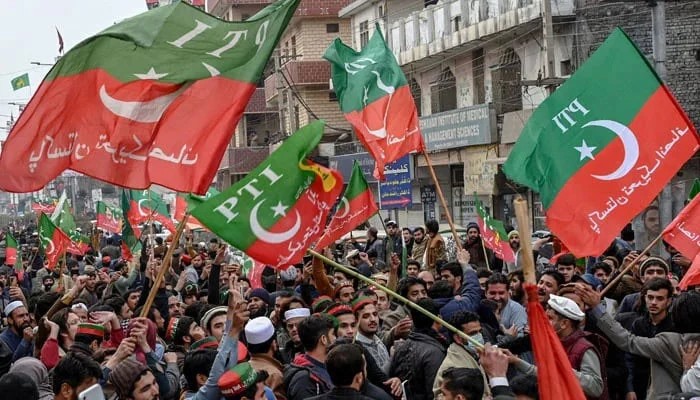
Security authorities have drawn a clear distinction between the Jamaat-e-Islami and Pakistan Tehreek-e-Insaf (PTI) protests planned in and around the federal capital, saying they do not currently see an operational link between the two activities. A senior security official, speaking on condition of anonymity, said the security establishment was not as concerned about the Jamaat-e-Islami protest as it was about the PTI's planned march towards Islamabad on September 27.
The official said the assessment regarding the two groups was based primarily on their respective past conduct and the potential impact of their protests on public order and daily life of citizens. The Jamaat-e-Islami has planned its Islamabad march against the petroleum levy and rising fuel prices, while the PTI has announced its September 27 march with demands including the release of party founder Imran Khan and implementation of court orders.
The security official said the authorities did not have the same level of concern about the Jamaat-e-Islami, arguing that the party had generally demonstrated that it would not undertake activities that could cause damage to the country or create disruption to the lives of ordinary citizens. The official, however, said the security assessment of PTI was different because of what he described as the party's past record during protests and demonstrations.
According to the official, the government and security institutions were particularly concerned about any activity that could lead to disruption of public life in Islamabad, damage to public property or other law & order complications. The official also referred to the PTI's political and campaigning activities outside Pakistan as part of the broader security assessment, without elaborating. The official stressed that the authorities were not opposed to the constitutional right to protest.
However, he said any demonstration would have to remain within the framework of law and could not be allowed to bring Islamabad's normal civic life to a halt. "Past practice will not be allowed to be repeated," the official said in substance, making it clear that the authorities did not intend to allow Islamabad to become hostage to political activity. The security establishment's position comes amid increasingly firm warnings from the government ahead of the PTI's September 27 mobilisation.
Interior Minister Mohsin Naqvi has already said that no group would be allowed to enter Islamabad on September 27 and warned that the government would stop any such march "in every possible way". The Interior Ministry has also held security meetings involving law-enforcement agencies and provincial administrations as preparations intensify for the PTI protest. The government has maintained that its objective is to protect public safety and prevent disruption of normal life.
The Islamabad High Court's recent ruling has provided an important legal backdrop to the government's position. While disposing of a petition against the PTI's planned September 27 march, the court directed the chief ministers to ensure that provincial government resources and official machinery were not used for the protest. The court also held that no political party or leader had a lawful right to occupy public roads, highways or government buildings.
The senior security official said the authorities would implement the court's directions in letter and spirit, particularly where the rights and routine activities of ordinary citizens were concerned. The official indicated that the distinction being drawn between the two protests did not mean that the Jamaat-e-Islami demonstration would be exempt from the law. Rather, the security assessment was that the nature and potential consequences of the two protests were different.
The distinction is significant because PTI has publicly described its September 27 mobilisation as peaceful and constitutional. PTI Chairman Barrister Gohar Ali Khan has said the party would not use government resources for the protest and has rejected any plan to force entry into the Adiala jail. At the same time, PTI has publicly expressed support for the Jamaat-e-Islami's protest and invited the Jamaat-e-Islami leadership to join its September 27 march.
This indicates political engagement between the two sides, although the senior security official said the authorities did not currently regard the two protests as a single coordinated security operation. The official's comments suggest that the principal concern for the security apparatus is therefore not the mere holding of a political protest, but whether a demonstration remains within legal limits without disrupting the lives, movement and economic activities of residents of the federal capital.