
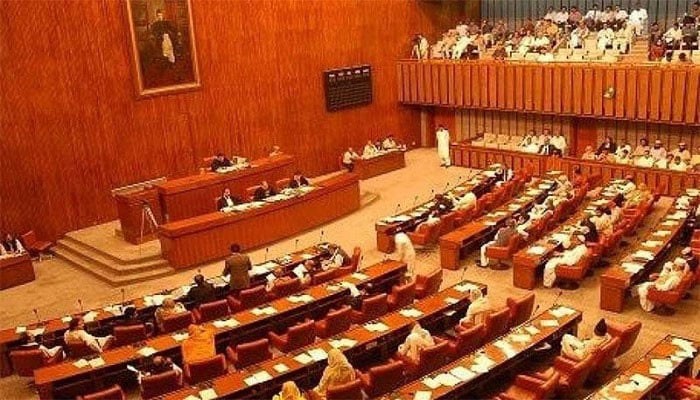
The Senate Standing Committee on Law and Justice has expressed concern over the significant number of recommendations of the Law and Justice Commission of Pakistan (LJCP) awaiting implementation, emphasizing the need for a stronger follow-up mechanism with relevant authorities. Chairman of the committee Senator Farooq Hamid Naek sought a comprehensive, report-wise implementation status, clearly identifying recommendations that had been implemented, partly implemented, remained pending or had not been accepted. He also sought the present status and reasons for cases in which recommendations remained outstanding.
The committee met to review the working of the LJCP, with a particular focus on the implementation of its law reform and judicial policy recommendations, case management, institutional capacity, and access to justice. The secretary of the LJCP gave a detailed briefing on the commission's statutory mandate and activities, including law reform, judicial policy, case management, e-filing, access-to-justice initiatives, and the utilisation of the Access to Justice Development Fund (AJDF).
The committee was informed that the LJCP had approved 143 Law Reform Reports, of which 46 recommendations had been implemented, 33 partly implemented, and 58 remained unimplemented. The secretary explained that the implementation status was dynamic, as certain recommendations could subsequently be enacted, adopted with modifications, or overtaken by subsequent legislation. Naek sought detailed information regarding the staff of the Law and Justice Commission, including its sanctioned and working strength and service matters.
Case management, fixation, and prolonged pendency of cases also received particular attention during the meeting. The chairman sought details of the case management policies and recommendations formulated by the LJCP, the extent to which they had been implemented, and measures taken to monitor their effectiveness. Members expressed concern over cases remaining pending for prolonged periods and litigants facing delays in obtaining hearings and final decisions.
The committee observed that while the formulation of judicial policies was important, their effectiveness must ultimately be assessed in terms of their implementation and the relief they provided to ordinary litigants. The committee also discussed ongoing e-filing reforms in the Supreme Court and High Courts. Members emphasized the need to ensure that digital reforms simplified procedures and facilitated access to justice rather than creating additional difficulties for litigants and legal practitioners.