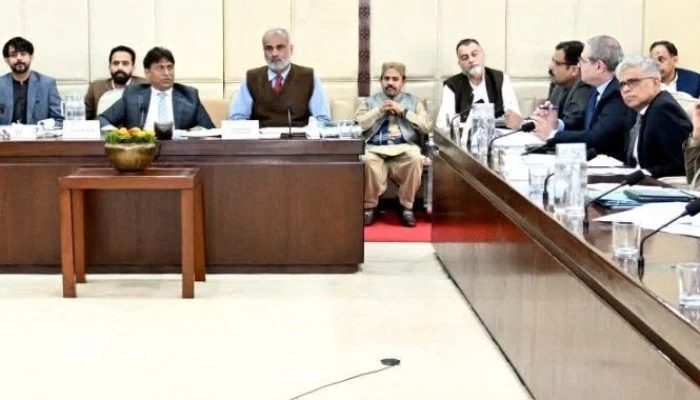
Senate subcommittee demanded a plan to share Rs3.6 trillion oil and gas profits with provinces, Islamabad, 27 March 2024.
- Profits of Rs3.6 trillion earned by four oil and gas companies since the 18th Amendment.
- Provinces have received no share of these profits.
- Subcommittee directed the Ministry of Petroleum to devise an equal distribution mechanism.
Oil and Gas Profit Share
Senator Barrister Zamir Hussain Ghumro, convener of the Senate subcommittee on Devolution, said that the four oil and gas companies · PPL, OGDCL, POL and SSGC · had earned Rs3.6 trillion in profits since the 18th Constitutional Amendment. He added that the total amount could exceed Rs6 trillion once the profits of other companies were included. The subcommittee noted that Article 172(3) of the Constitution guarantees joint and equal ownership of mineral oil and natural gas by the federal and provincial governments, yet no mechanism had been established to share the profits with the provinces. Ghumro directed the Ministry of Petroleum to formulate an effective mechanism for equal distribution of profits between the federal government and the respective provincial governments. He ordered the ministry to place the matter before the federal cabinet for urgent approval and to share a summary with the subcommittee. The senator warned that failure to comply could lead to the issue being referred to Pakistan's audit authorities for further examination. He also said that the subcommittee would call chief ministers and federal ministers for finance and petroleum to a meeting if the matter remained unresolved.
Provincial Representation in Federal Services
The subcommittee reviewed the Establishment Division's compliance with Article 38(g), which requires provincial representation in federal services, corporations and bodies. It examined all modes of appointment, including recruitment, promotion and transfer. Ghumro observed that the rural‑urban division in Sindh contradicted Article 38(g) and directed that the distinction be abolished, maintaining the province's share as a whole. He expressed concern over Punjab's 60.17 per cent representation in Basic Pay Scale (BPS) 18 to 22 and called for equitable representation of Sindh and Balochistan. The Establishment Division reported that 5,136 posts in BPS 1 to 15 had been advertised for Balochistan to address the province's employment needs. It also briefed the subcommittee on exemptions granted by the federal cabinet to facilitate Balochistan applicants and its plan to create 200,000 employment opportunities in the province. Ghumro demanded that recruitment arrangements ensure fair opportunities for candidates from deserving households and regions and that the division submit a comprehensive rectification plan for Sindh, including posts in BPS 1 to 15.
Audit and Compliance Measures
The subcommittee asked the auditor general of Pakistan to ensure compliance with Article 172(3) while auditing the profits of oil and gas corporations. It also directed the Federal Public Service Commission to provide details of vacant posts and appointments from Sindh and Balochistan, ensuring strict adherence to the prescribed provincial shares. The auditor general was instructed to attend the next meeting in person, as his absence had been noted. The Establishment Division assured the subcommittee that the rectification process would be completed promptly and that recruitment would remain transparent, impartial and free from nepotism or individual bias while respecting provincial shares.