ked a bargain. Every generation is told that the country has reached its turning point. In the 1960s, we were the model others would supposedly copy. In the 1980s, strategic geography and remittances promised take-off. After 2001, foreign inflows, finance and telecommunications offered another beginning.
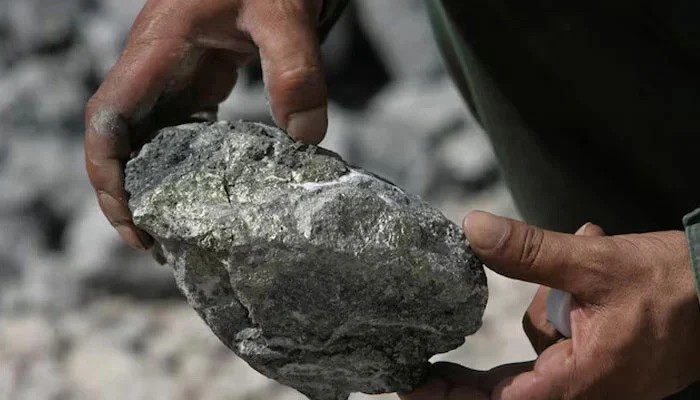
Today, copper, gold, rare earths and other strategic minerals are advertised as the next great rescue. The underlying political economy changes much less. Let us begin with the original case for Pakistan. The fear that Muslims could become permanently vulnerable under unrestrained religious majoritarianism was neither imaginary nor trivial. What is happening to minority citizenship in India today makes it even harder to dismiss that warning. Yet a justification for creating a homeland is not, by itself, a constitution for governing one.
The first answered who needed protection. The second had to answer who would rule, by what consent, within which federal arrangement and with what rights. Pakistan was not entirely unimagined. It was imagined by many but never constituted by a 'collective'. There were competing ideas about Islam, democracy, citizenship, provincial autonomy, economic organisation and the relationship between the Muslim-majority and Muslim-minority regions of India. Sovereignty arrived before these disagreements became an enforceable social contract - and a single person's speeches do not constitute a social contract.
Legally, Pakistan began as a parliamentary state with a sovereign Constituent Assembly. It is wrong to say there was no democratic aspiration at all. But the assembly came through indirect, pre-Partition arrangements; the Government of India Act 1935 remained the provisional constitutional shell; and the first Constitution did not arrive until 1956. Pakistan held no direct national election based on universal adult franchise until 1970. When that election produced a clear majority in East Pakistan, power was not transferred to it. The two-wing country broke apart.
No founder's words, however revered, can substitute for rules owned by the people. Jinnah spoke of assembly sovereignty, equal citizenship and constitutional government. He also combined the offices of governor-general and president of the Constituent Assembly while exercising exceptional authority during an exceptional emergency. The historical question is whether emergency precedents survived the emergency and were inherited by successors who did not possess his legitimacy. Pakistan's regional circumstances pushed hard in that direction. Partition uprooted millions, divided Punjab and Bengal, severed commercial and administrative networks and left Pakistan with raw cotton and jute but little processing capacity.
The Kashmir war began before the country had framed its constitution. Afghanistan contested the western border. The state consisted of two wings separated by Indian territory, with the demographic majority in Bengal but much of the senior bureaucracy and military power in the western wing. These threats were real. They help explain centralisation; they do not make unaccountable centralisation inevitable. Objective insecurity created demand for a strong centre.