
MANILA: Global leaders are set to descend on Asia for a series of high-stakes meetings that will tackle everything from AI to trade to, potentially, nuclear disarmament. Focus then shifts north for the annual Asia-Pacific Economic Cooperation (APEC) conference in Shenzhen.
Russian President Vladimir Putin is expected to be a key figure at APEC, while India's Narendra Modi will be attending the ASEAN meet. US President Donald Trump and Canadian Prime Minister Mark Carney will travel to both.
"I don't think the region will see him as a lame duck," Siew Mun Tang, former head of the ASEAN Studies Centre at Singapore's ISEAS-Yusof Ishak Institute, told reporters. "He has two more years.
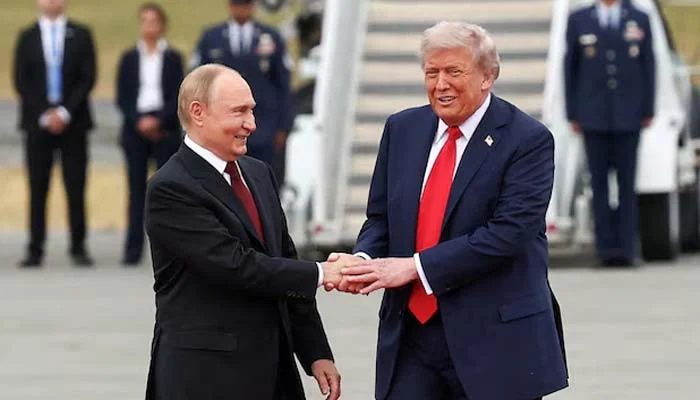
He can do a lot of things." The agenda for a proposed sit-down between China's Xi Jinping, Trump and Putin may remain a mystery, but no meeting at the APEC conference will attract more attention. While Putin has pushed for talks on Ukraine, Trump this week suggested the focus would be on denuclearisation and ending his faltering war in Iran.
Analysts told us that "the symbolism... will account for a good portion of its substance," the Brookings Institution's Ryan Hass told us. While he expects Xi and Putin to give Trump "a respectful hearing" on arms control, Hass said they will likely only "agree on broad principles without committing to any follow-on actions".
Wang Wen, dean of Renmin University's Chongyang Institute for Financial Studies, agreed major outcomes were unlikely, calling it "a high probability that talks could end without a breakthrough". Separately, a meeting Trump once hoped for with North Korean leader Kim Jong Un appears dead in the water, with Pyongyang rejecting repeated overtures.
Artificial intelligence will be a hot topic at APEC, after Xi and Trump agreed in September to set up a "communication channel" for AI incidents. Trump has repeatedly dismissed fears that AI could pose a threat to humanity.
But despite the countries' fierce tech rivalry, calls for cooperation are growing due to shared concerns regarding bioweapons and infrastructure hacking. Xi noted in September that Washington and Beijing have a responsibility to "develop and manage AI for good and ensure that the development of AI is always under human control".
APEC talks could build on the pair's previous communication channel agreement, Stephen Wu, founder of Carthage Capital, told us. "Both sides need an outcome, and a hotline is diplomacy's cheapest: free to announce, free to ignore," he said.
Meanwhile, a spying scandal enveloping Nvidia boss Jensen Huang, who was once widely expected to accompany Trump to APEC, threatens to cast a pall on AI discussions. US officials have accused him of sleeping with a woman they claim was working for Beijing.
In Manila, the Philippines' year in the ASEAN chair looks set to come and go without fulfilling one of its top objectives: signing a South China Sea Code of Conduct (COC) with China. The ongoing dispute over the waterway has cast a shadow over the bloc's events all year.
Philippine and Chinese sailors clashed a day before the start of a July summit, and a diplomatic row erupted at an October defence meeting. One Southeast Asian diplomat involved in summit preparations spoke on condition of anonymity, while Tang, the former ASEAN Studies Centre chief, said the code may have outlived its usefulness.