
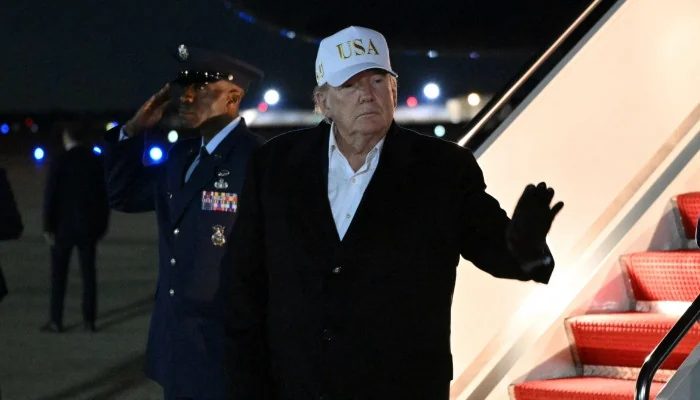
US President Donald Trump renewed baseless allegations of election fraud Monday after Democrats swept both chambers of the US Congress, reversing course just days after saying he would accept the midterm results. "Does anybody really believe that this 'Election' was honest?
How could the polls be so wrong???" Trump wrote on Truth Social, alleging without evidence that large early voting "dumps" had made Republican victories impossible. "It's all about the machines, which are far more important than the voter!" he added.
The accusations marked a sharp reversal from Trump's initial acceptance of the outcome. "I am absolutely willing to accept those results," he told The New York Times on election night.
The president has repeatedly made unfounded claims of election fraud, most notably following his defeat by Joe Biden in the 2020 presidential election. Political analysts suggest this rhetoric is aimed at maintaining his base despite the legislative setbacks.
"Donald Trump's pathetic return to election denialism was inevitable," said Chuck Schumer, the top Democrat in the US Senate. "He can whine all he wants, but nothing will stop this inescapable truth: For the last 2 years of his presidency, Trump will face the largest Democratic congressional majorities in decades, all because he has been an unprecedented failure."
The Democratic sweep has sent shockwaves through the Republican party, with many senior members distancing themselves from the former president's latest claims. The shift in power dynamics in Washington is expected to lead to significant legislative gridlock.
Election officials across the country have consistently maintained that the voting process was secure and transparent. Despite these assurances, Trump's social media posts continue to resonate with a segment of his supporters who remain skeptical of the electoral process.
The White House has not yet issued a formal response to the latest allegations, though press secretaries have previously dismissed such claims as distractions from the administration's policy agenda. As the political landscape shifts, the focus now turns to how the new Congress will handle the president's legislative proposals.
With a Democratic majority in both houses, the path for any major policy changes appears increasingly narrow. Observers note that the president's focus on election integrity may be a strategic attempt to frame the midterm results as illegitimate rather than a reflection of his own political standing.
Ultimately, the coming months will test the resilience of American democratic institutions as the nation navigates this period of intense political polarization and legislative uncertainty.