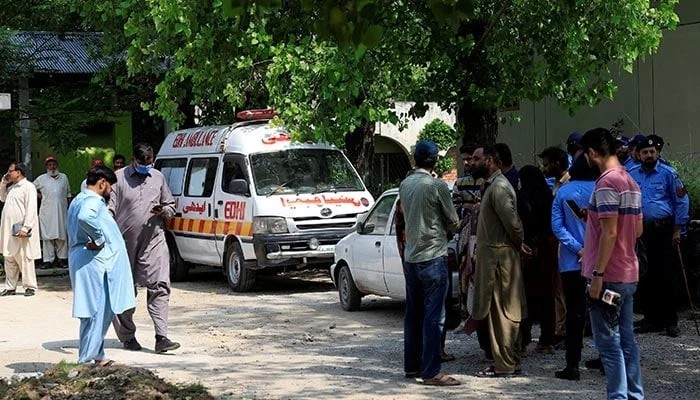
Fourteen newborns died in a public hospital in Islamabad. A nursery caught fire. Statements were issued. Committees were formed. Responsibility was promised. We have seen this before. The prime minister takes notice. A secretary is removed. An inquiry is ordered. A report is promised. Then silence returns. Until the next tragedy. Red alert: Pakistan Institute of Medical Sciences (PIMS) is not only a hospital tragedy. PIMS is a governance tragedy. A major public hospital had an administration. It had a chain of command. And yet newborn babies died in a ward that should have been one of the safest places in the country. Cold fact: This is what happens when everyone is responsible and no one is accountable.
Pakistan has spent decades debating who should govern. Perhaps we should now ask a simpler question: how many governments does one Pakistani citizen really need? At present, authority is scattered across Islamabad, provincial capitals, divisions, districts, tehsils and union councils. Then come senators, MNAs, MPAs, mayors, chairmen, commissioners, deputy commissioners, departments, regulators and boards. Too many signatures. Too little responsibility. My proposition is simple: two governments are enough. One national government. And empowered city and district governments.
The national government should do what only a national government can do: defence, foreign affairs, currency, macroeconomic management, national taxation, interstate infrastructure, national standards and strategic regulation. Everything else must move closer to the citizen. Fire safety. Emergency response. These are local functions. They need local owners. Cold truth: Pakistan's present system creates distance between money and outcomes.
Islamabad collects. Money moves to Lahore, Karachi, Peshawar and Quetta. From there it enters departments, secretariats, directorates and administrative chains. By the time it reaches a school, a clinic, a hospital ward or a road, responsibility has become difficult to trace. In today's Pakistan, money moves. Accountability does not. A simpler model would shorten the chain.