
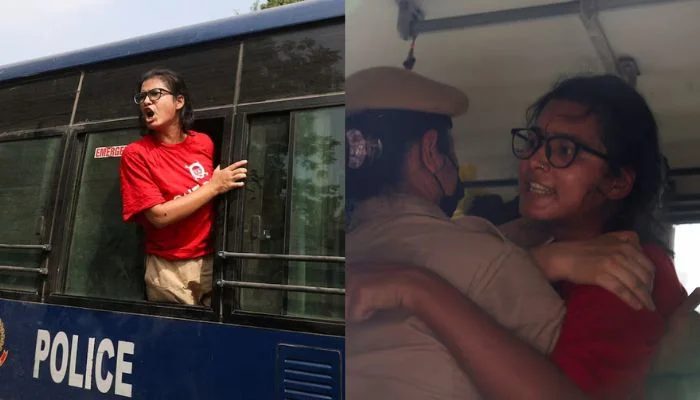
Neha Bora was known mostly inside India's student political circles until recently, but now, the 29-year-old doctoral candidate has become one of the most recognisable faces of the growing youth protest movement challenging Prime Minister Narendra Modi's government. Bora is the national president of the left-wing All India Students' Association (AISA) and has been at the centre of demonstrations over unemployment, examination paper leaks, and more recently, alleged irregularities in India's voter rolls.
The student leader hails from Uttarakhand and has completed her studies from Delhi University and Jawaharlal Nehru University. Before becoming politically active, Bora was involved in theatre and has credited her theatre experience in shaping how she is able to effectively communicate with audiences.
Bora became a much visible political face during the protests against India's citizenship law in 2019 and 2020. Since then, Bora has been frequently seen at the forefront of student protests, frequently speaking in Hindi and English, and linking immediate problems like employment or irregularities in exams with broader questions of institutions and democracy.
In recent times, she has become a globally known political activist amid growing youth protests. She has demonstrated with fellow students in connection with examination paper leaks and later with those of the "Cockroach" youth movement, which has alleged that the Election Commission of India has wrongly deducted the names of millions of people from the voters' list.
The Election Commission has denied allegations of political bias. Bora was arrested again this weekend while protesting in Delhi.
Previously, Delhi Police briefly arrested another woman from the protests after they mistook her for Bora while she, herself, was protesting elsewhere in central Delhi. She is not the sole leader of the youth movement in India; Cockroach Janata Party's head Abhijeet Dipke was also briefly detained by police.
Similarly, popular YouTuber Dhruv Rathee was also taken into custody on Saturday and released shortly after. Political analysts believe that the current wave of student activism reflects deep-seated frustrations regarding economic opportunities and governance in the country.