
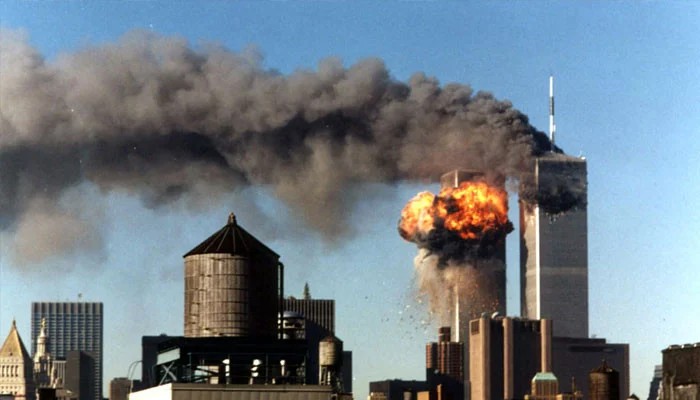
A quarter-century after the terrorist attacks of Sept 11, 2001, Muslim Americans continue to navigate a complex landscape of suspicion and discrimination, even as their community grows in size and political influence, new research and data show. While Muslim Americans shared in the nation's collective grief and fear on that fateful day, they have since carried the additional burden of being singled out for suspicion. Public attitudes toward Islam, according to a spring 2026 Pew Research Centre survey, have become more negative and more politically polarised than in the immediate aftermath of 9/11.
The Pew survey found that 43 percent of US adults believe Muslims are less patriotic than other Americans, and 42 percent say Muslim Americans are having a negative impact on the country. When asked to explain their views, some respondents explicitly referenced the 2001 attacks, citing "9/11," "Remember the twin towers?" and "Fear of another 911 terrorist attack." Perhaps more striking, the proportion of Americans who say Islam encourages violence more than other religions has never fallen below 38 percent since 2002.
In early 2026, about half of US adults (51 percent) held that view. The partisan divide on this question has widened dramatically. Today, 76 percent of Republicans and Republican-leaning independents say Islam encourages violence, compared with just 29 percent of Democrats and Democratic leaners.
In March 2002, shortly after then-President George W Bush made a high-profile visit to the Islamic Centre of Washington, DC, and declared that "Islam is peace," the gap was far narrower - 32 percent versus 23 percent. FBI data shows that reported anti-Muslim hate crimes spiked to 481 in 2001, up from just 28 the previous year. While the number has fluctuated since - reaching a low of 95 in 2021 and a high of 307 in 2016 - it has never returned to pre-9/11 levels.
Muslim Americans continue to report significant discrimination. In Pew's 2017 in-depth study - the most recent comprehensive survey - many said they had experienced suspicion, offensive name-calling, or being singled out by airport security or law enforcement. Yet paradoxically, a majority also reported receiving support from friends and neighbors.
In late 2001, 75 percent of Muslims said Americans had been respectful and tolerant, even as 52 percent acknowledged post-attacks discrimination. As of May 2026, most Muslims say there is "a lot" of discrimination against their community and that media portrayals are often unfair. Still, 34 percent say someone has expressed support for them in the past year because of their faith.
Not all Muslim Americans share the same experiences. Younger Muslims and those born in the US are less likely than older immigrants to view the American public as friendly toward Muslims. They are also more likely to report experiencing discrimination.
One US-born Muslim interviewee, Yasmin, captured this generational divide in Pew's 2017 study: "I think the older generation of immigrants ... are definitely more quiet on these issues ... versus me, I've been here, I was born here, I'm here to change it and to make it better." Despite persistent bias, the US Muslim population has more than doubled over the past two decades. There are now an estimated 5.5 million Muslims of all ages in the country, up from 2.4 million in 2007.
The number of mosques has also grown steadily, from roughly 1,200 in 2000 to nearly 2,800 in 2020, according to the Faith Communities Today project. Political representation has followed suit. In 2001, there were no Muslims in Congress.
Today, there are four, with a fifth set to join. In 2022, Dr Mehmet Oz became the first Muslim nominated by a major party for a US Senate seat. More recently, Abdul El-Sayed won Michigan's Democratic primary for Senate in 2026.
And in a historic milestone for New York City - the very site where the Twin Towers fell - Zohran Mamdani was inaugurated this year as the city's first Muslim mayor. Nevertheless, anti-Muslim sentiment remains a feature of American political discourse. In March 2026, Rep Chip Roy of Texas, co-founder of the Sharia-Free America Caucus, posted "No more Muslims..." on 'X'.
In August, Rep Nancy Mace of South Carolina wrote, "Every single Muslim holding public office in America is a trojan horse, and a threat to both national security and our republic." Such remarks have drawn widespread criticism from civil rights groups and interfaith organisations, who note that Muslim Americans have served honourably in the military, government and civic life for generations.