
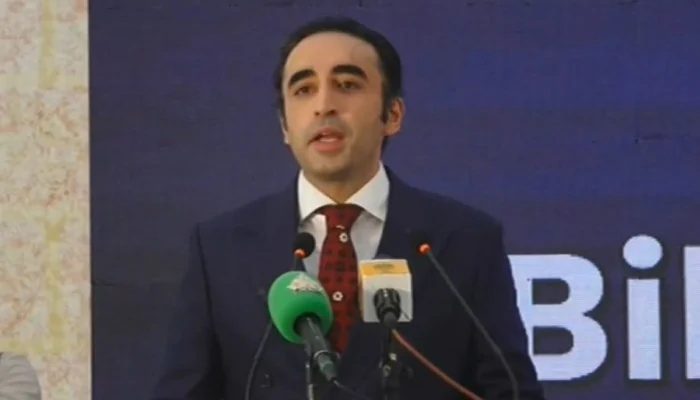
PPP Chairman Bilawal Bhutto‑Zardari warned on Nov 17 that forcing Sindh's division would spark bloodshed in Karachi and Hyderabad.
- He opposed any division of Sindh by force.
- He said the constitution already provided a legal procedure.
- He called for a political reset and a round‑table conference.
Provincial Division Debate
Addressing an event at the Karachi Press Club, Bilawal said that if the province were divided by force, society would split, enmity would rise, ordinary people would take up arms and the bloodshed would exceed a single death.
He stated that the PPP supported the creation of provinces only in line with the wishes of the people, the constitution and the law, and that the party opposed division through force and coercion.
Bilawal noted that the constitution already laid down a procedure for creating provinces and that calling for a referendum amounted to seeking an unconstitutional method.
He recalled that referendums in Pakistan's history had been held for undemocratic purposes and urged any minister calling for a referendum to first hold it in his own assembly.
He added that the Sindh Assembly had expressed its position on the division of Sindh ten times, and that he had not been consulted on the creation of new provinces.
Bilawal said he did not know what "Mohsin bhai" was trying to do, and that neither the prime minister nor the cabinet had spoken about the provinces, nor had the matter been debated in the cabinet or parliament.
He warned that actions taken through back doors would not last forever.
Financial Resources and Constitution
Bilawal pointed out that the provinces had not received the financial resources due to them, and that plundering provincial resources explained weak health systems and broken roads.
He said the federal government, not the provincial governments, bore responsibility for why money was not spent on the people of Pakistan.
He invited the prime minister to sit down with the Sindh government to solve people's problems together, and he backed Shehbaz Sharif for prime minister, saying he wanted Sharif to be successful and to have enough authority to control his ministers.
Bilawal recalled that One Unit had been imposed by force, yet the people of Sindh had not stepped back from their struggle, and that Karachi's designation as capital had also been forced before the 1973 Constitution restored all provinces.
He noted that sixteen years had passed since the 18th Amendment, yet provinces still had not received their financial share, which amounted to about Rs 1.7 trillion from the petroleum levy.
He emphasized that authority over rare minerals lay with provincial governments and that the federation and provinces must cooperate to attract global investment.
Political Reset Initiative
Bilawal described the system's deterioration as deliberate rather than accidental, and he accepted that he too bore fault for the condition.
He said the proposed solutions would not address underlying issues and that any reset must be political, not non‑political.
He announced his intention to convene a round‑table conference or an all‑parties conference on the destroyed system and its reset, aiming to build consensus to end inflation and poverty.
Bilawal called Imran Khan a "political prisoner" and expressed his desire to see a day when no prime minister was jailed after leaving office, questioning whether all former prime ministers were thieves or victims of political vendetta.
He observed that PTI's troubles stemmed partly from politics and partly from the party's own mistakes, and he said he would try to bring all parties together to discuss the system's collapse and reset.