
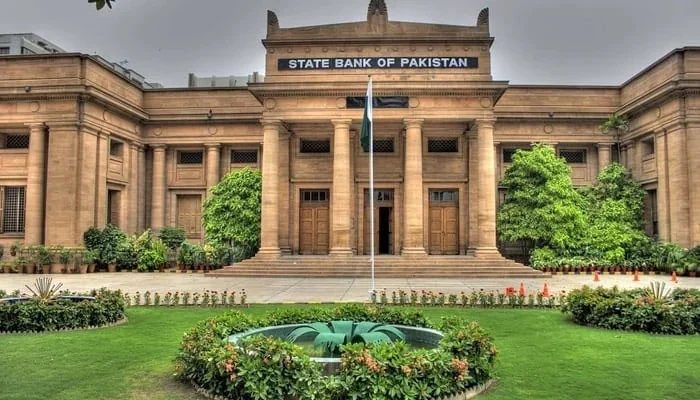
The State Bank of Pakistan (SBP) said on Tuesday that Pakistan's economy remained resilient in fiscal year 2025-26 despite a global energy price shock. Inflation averaged 5.5% from July to February 2026.
- Pakistan's economy remained resilient in FY 2025-26 despite a global energy price shock.
- Inflation averaged 5.5% from July to February 2026, while core inflation moderated for most of the year.
- Foreign exchange reserves surpassed the billion target, with net FX purchases of .1 billion and a reduction of forward/swap liabilities by .6 billion.
Monetary Policy and Inflation
The policy rate was cut by 50 basis points in December 2025 and raised by 100 basis points in April 2026.
Average NCPI inflation stood at 5.5 percent for July-February 2026. A sharp rise in global oil prices after the Middle East conflict pushed headline inflation into double digits from April 2026 onward.
Core inflation moderated for most of the year but rose slightly after energy costs began to affect production and transport services.
The outbreak of the Middle East conflict deteriorated inflation and external outlooks, prompting a 100-basis-point increase in April 2026 to contain second-round effects and support macroeconomic stability.
Similar policy responses were observed worldwide, with many central banks pausing cuts or raising rates.
Foreign Exchange Reserves and External Balance
Foreign exchange reserves exceeded the $18 billion end-June 2026 target.
The State Bank of Pakistan (SBP) made net FX purchases of $8.1 billion and reduced forward/swap liabilities by $1.6 billion, reflecting a qualitative improvement in the reserve position.
This build-up occurred despite a moderate current account deficit, as higher remittances and ICT exports offset the widening merchandise trade deficit.
The overall balance of payments improved through ample multilateral and bilateral flows and successful bond issuances.
The stronger reserve base, sustained fiscal consolidation, and successful completion of IMF reviews under the Extended Fund Facility and Resilience and Sustainability Facility helped lift sovereign ratings, restore investor confidence, and support exchange-rate stability.
The central bank emphasized that the structural reforms initiated during this period are essential for long‑term growth.
Financial System and Fiscal Consolidation
The Governor's Annual Report for FY26 highlighted that a prudent, data‑dependent monetary stance combined with continued fiscal consolidation strengthened the country's resilience against successive shocks.
The financial system remained robust, with banks expanding credit to the private sector and improving overall financial depth.
By focusing on export diversification and improving the ease of doing business, the government aims to reduce reliance on external debt.
The SBP remains committed to maintaining price stability while fostering an environment conducive to private investment.
The integration of digital banking and improved financial inclusion metrics have further bolstered the resilience of the banking sector, ensuring that credit flows remain uninterrupted even during periods of high interest rates.
Looking ahead, the SBP report suggests that while global uncertainties persist, the domestic economic framework is better equipped to handle volatility.