
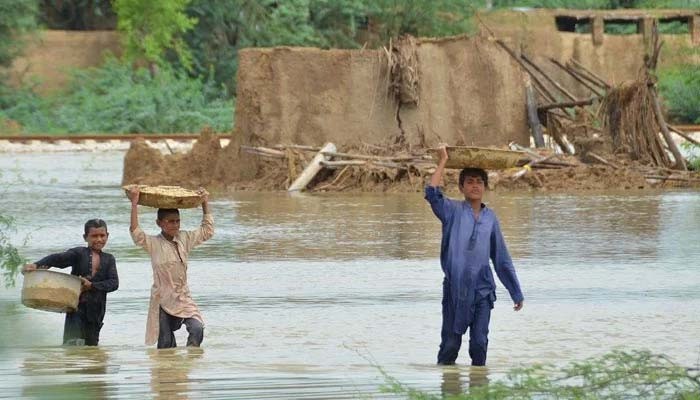
For countries on the front line of climate change, how much climate finance can be converted into resilience before the next disaster strikes has become far more consequential than simply how much money can be mobilised. The catastrophic floods of 2022 exposed the enormous human, economic and fiscal costs of climate vulnerability, while the floods of 2025 reinforced how climate shocks have become recurring pressures on communities, livelihoods, infrastructure and public finances.
The catastrophic flooding in Nepal in August 2026 has provided another sobering regional warning. A glacier collapse triggered devastating floods, killing over a thousand people and leaving thousands more missing, while damaging critical infrastructure. The lesson for Pakistan and the wider Himalayan region is clear: mobilising climate finance is necessary, but money alone does not create resilience.
The real test is whether institutions can plan, prioritise, deploy and account for those resources in ways that reduce vulnerability and deliver lasting public value. This is where Pakistan's climate finance debate needs to evolve. International commitments, climate funds and financing pledges understandably attract significant attention, particularly for a country facing enormous adaptation, recovery and reconstruction needs.
Yet climate finance cannot remain a collection of stand-alone projects operating alongside the wider machinery of government. It must increasingly become part of mainstream public financial management, national and provincial budgets, public investment planning and medium-term fiscal frameworks. The developments of 2026 make this institutional question even more pressing.
Pakistan's federal budget for 2026-27 has again highlighted the tension between escalating climate risks and constrained fiscal resources. Budget reporting highlighted reductions across several climate-related spending heads, even as disaster-management allocations increased. This is not simply a question of whether the climate budget is large enough.
Rather, when fiscal space is limited, are available resources being directed towards the investments that can reduce future losses most effectively? If Pakistan cannot immediately increase the resources available for climate action, it must become much better at prioritising them. Encouraging signs suggest this transition is beginning.
Climate budget tagging has increasingly been institutionalised, helping identify and monitor climate-related expenditure across government. Climate considerations are also being incorporated into public investment decision-making and project selection. But tagging expenditure is only the beginning.
A project labelled 'climate-related' is not automatically a successful climate investment. The critical questions are whether it addresses a clearly identified climate risk, reaches the communities and locations most exposed to that risk, is implemented effectively and generates measurable resilience outcomes. Recent scrutiny of Pakistan's climate allocations reinforces this distinction.
The objective should not be to maximise the volume of expenditure classified as 'climate finance' simply to demonstrate progress. It should be to improve decision-making. Climate-sensitive public finance should help policymakers determine whether investments reach vulnerable regions, whether scarce resources are directed towards prevention rather than repeated reconstruction, and whether public investments are actually reducing long-term fiscal risk.