
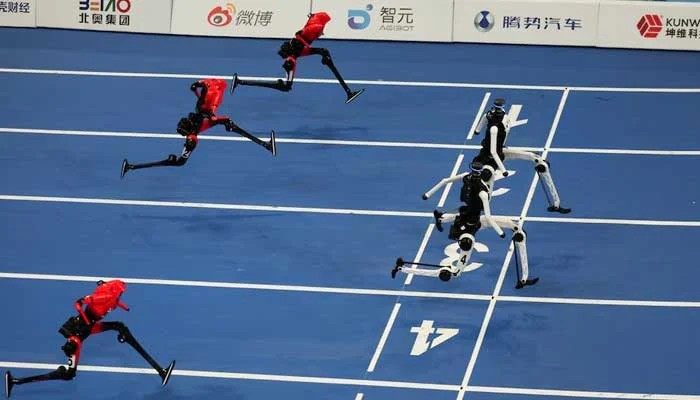
A made-in-China humanoid shattered Usain Bolt's world record time in the 100-metre sprint this week, a milestone in the development of robots that can match, and even surpass, human achievements. But the robot did not beat Bolt by running like him, or like any human, sport science experts say.
In its final and fastest run, China's Tiangong Ultra humanoid ran 100m in 8.64 seconds, blazing past Bolt's 9.58-second human world record. That amounts to an average speed for the robot of almost 42 kph (26 mph). "It is a remarkable advancement in technology where humanoids can keep balance and sprint at a speed that humans can't catch up with," said Jung Moon-hyun, a sports science professor at South Korea's Chungnam National University.
The differences between Bolt's closely studied 2009 world-record run in Berlin and the humanoid runs in Beijing also highlight both the power of robots and the areas, like decision-making and perception, where they still lag. Bolt burst from the blocks in Berlin with a lightning-fast reaction time of 0.146 seconds, while Tiangong starts from a clunky, upright posture.
Tiangong Ultra's developer said it had redesigned parts of the robot's torso and waist to cut weight and improve motors and control software. The result is an almost superhuman cadence of shorter steps, allowing the robot to maintain its speed without suffering from human neuromuscular fatigue in the final metres.