
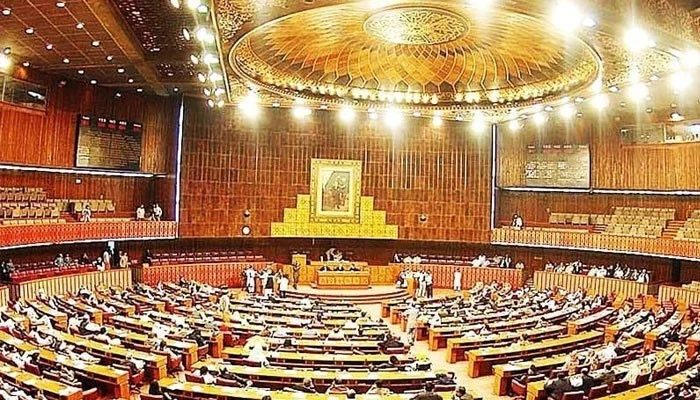
National Assembly Speaker Sardar Ayaz Sadiq's efforts to foster consensus on the legislative process and bring parliamentary parties together on a common course of action have yielded significant results, culminating in the record passage of 24 bills during the 30th session of the National Assembly.
According to a National Assembly Secretariat report on NA's 30th session, a total of 24 bills, including 17 government bills and seven private members' bills, were passed during the Oct 13-30 session. On Ayaz Sadiq's special directives, several meetings of the Select Committee were convened to make the legislative process more effective and consensual.
During these meetings, reservations and objections raised by the government coalition parties and the opposition about various proposed laws were examined in detail. Sustained consultations and negotiations resulted in consensus on most issues, paving the way for the passage of important legislation.
Of the 17 government bills passed by the National Assembly, seven were transmitted to the Senate, while 10 were forwarded to the president for assent. Similarly, out of the seven private members' bills passed by the House, five were transmitted to the Senate, while two were sent to the president for assent.
In addition to the legislation passed, a further 16 bills, comprising nine government bills and seven private members' bills, were introduced during the session. A motion regarding the constitution of the Parliamentary Committee on Electoral Reforms was also unanimously adopted.
According to the NA Spokesperson, Sardar Ayaz Sadiq played a pivotal role in advancing this important legislative agenda. Giving priority to legislation concerning public interest, he promoted effective coordination and consultations among parliamentary parties to develop consensus.
Representatives of parliamentary parties, officials of the relevant ministries, and officers of the National Assembly Secretariat participated in the meetings of the Select Committee constituted for this purpose. Detailed deliberations on various bills helped resolve contentious issues and address differences.
To ensure that proceedings of the House remained effective, purposeful, and responsive to public concerns, Ayaz Sadiq also ensured the presence of relevant ministers and parliamentary secretaries during the Question Hour. On his directions, senior officials of the ministries were required to remain present in the galleries during the Question Hour and proceedings on Calling Attention Notices, enabling members to receive timely and authentic responses to their queries.
During the 30th session, the National Assembly also adopted three resolutions. The report further stated that relevant ministers and parliamentary secretaries responded to 298 questions raised by the members.
Of the 17 calling-attention notices taken up during the session, government ministers or parliamentary secretaries responded to 15, while the remaining two were referred to the relevant standing committees.