
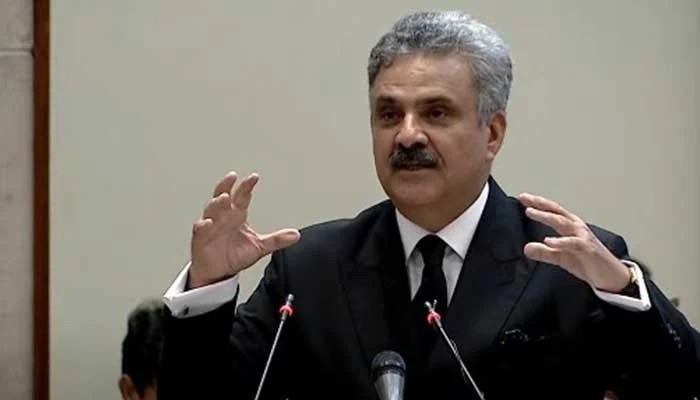
The Supreme Court on Monday opened the New Judicial Year 2026-27 with a renewed commitment to quicker justice, better case management, improved services and measurable institutional reform. In this respect, a ceremony was held here in Courtroom No. 1 of the Supreme Court of Pakistan, presided over by Chief Justice of Pakistan Justice Yahya Afridi.
All judges of the Supreme Court, the Attorney General for Pakistan, the Vice Chairman of the Pakistan Bar Council, the President of the Supreme Court Bar Association of Pakistan, and a number of members of the legal fraternity also attended the ceremony. Addressing the gathering, the Chief Justice emphasised that the true measure of the judiciary lies in the trust it commands, the fairness it upholds, and the assurance it gives every citizen that they will be heard, treated with dignity and given justice.
The Chief Justice emphasised that effective case management requires close coordination among the Court Office, Bench and Bar, particularly in accurate categorisation, timely fixation, effective hearing management and the avoidance of unnecessary adjournments. He highlighted the fixation of 40 per cent of old cases, elimination of discretion in out-of-turn fixation, disposal of 202 cases in a single day, and the daily presence of the Registrar at the Public Facilitation Centre at 11:00 a.m.
for the redress of grievances. The CJP also referred to structured bench allocation for time-sensitive, early-hearing, corporate, commercial, fiscal, civil, service and labour matters, aimed at ensuring that cases are dealt with according to their nature, urgency and priority. He reviewed the SC's institutional reform agenda, structured around five key pillars, and informed the gathering that, out of 86 reform actions across eight functional areas, 65 have been completed, eight are on track, while 13 require further attention.
"The ultimate objective of reform is better justice, with judicial independence accompanied by institutional accountability," the CJP said. Similarly, the Chief Justice also highlighted progress towards a National Standardised E-Filing Framework, aimed at bringing greater consistency to filing procedures across the Supreme Court, High Courts and District Judiciary and providing lawyers and litigants with a simpler and more predictable filing experience. On access to justice and public facilitation, the Chief Justice highlighted the establishment and strengthening of the Public Facilitation Centre, digital communication mechanisms, structured feedback systems and improved facilities for litigants, overseas Pakistanis and the media.
Reviewing case management, the Chief Justice reported significant progress in the disposal of priority categories of cases, adding that the Court has advanced death sentence appeals from 2015 to 2026, disposing of 613 appeals, with only 31 cases of 2026 remaining. In bail-before-arrest matters, he said that the Court has progressed from 2016 to 2026, disposing of 2,972 petitions, with 115 cases of 2026 remaining. In bail-after-arrest matters, the Court has advanced from 2009 to 2026, deciding 2,926 petitions, leaving 185 cases of 2026.
Similarly, the CJP also shed light on family cases, taxation matters, rent as well as service matters. Concluding his address, the Chief Justice called for the New Judicial Year 2026-27 to be marked by better case management, better services, greater predictability and measurable institutional improvement.