
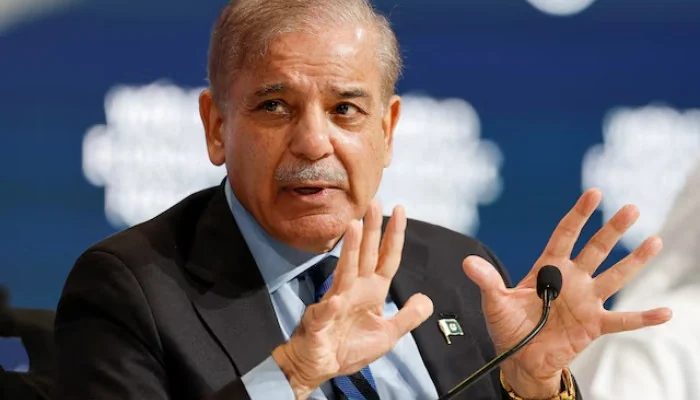
Prime Minister Shehbaz Sharif has reaffirmed Pakistan's commitment to strengthening fraternal relations with Bangladesh during a dinner at the PM House in honour of Bangladesh Parliament Speaker Hafiz Uddin Ahmed Bir Bikram and his accompanying delegation. Marking the first official visit to Pakistan by a speaker of the Bangladesh Parliament, the engagement highlighted shared history, cultural affinity, people-to-people links and parliamentary diplomacy, with regular delegation exchanges seen as vital to deepening cooperation across parliamentary affairs, education, culture, trade and democratic institutions.
- Prime Minister Shehbaz Sharif hosted Bangladesh Parliament Speaker Hafiz Uddin Ahmed Bir Bikram for a dinner at the PM House to strengthen bilateral and parliamentary ties.
- PM Shehbaz met Chinese Ambassador Jiang Zaidong and praised the Shenzhou-24 space mission carrying Pakistan's first astronaut, Muhammad Zeeshan Ali, to the Tiangong Space Station.
- The prime minister announced a committee to review and implement Jamaat-e-Islami economic proposals following consultations with party leaders and federal ministers.
Bangladesh and China Bilateral Engagement
While meeting Chinese Ambassador to Pakistan Jiang Zaidong, PM Shehbaz described the Shenzhou-24 space mission · launched from the Jiuquan Satellite Launch Centre on Nov 25, 2026, carrying Pakistan's first astronaut, Muhammad Zeeshan Ali, to the Tiangong Space Station · as living proof of ironclad bilateral ties that had reached the stars. Calling it the journey of 250 million Pakistanis that would inspire youth to aim for the moon and beyond, the prime minister thanked China for training both Pakistani astronauts.
He paid tribute to President Xi Jinping's leadership in opening China's space programme to friendly nations, reaffirmed Pakistan's commitment to peaceful outer space cooperation, reviewed 75th-anniversary diplomatic activities and handed over congratulatory letters for President Xi Jinping and Premier Li Qiang. He also praised Suparco, academic institutions, scientists and the armed forces. Separately, the prime minister inaugurated the 'Mehfooz Dawa' mobile application by scanning a medicine packet barcode that turned green to confirm authenticity, calling it a vital safeguard against counterfeit and substandard drugs.
Recalling the deaths of around 100 cardiac patients at the Punjab Institute of Cardiology during his 2010 · 2011 tenure as Punjab chief minister, Shehbaz said samples sent to laboratories in London, Geneva and Paris proved malaria medicines had been administered to heart patients despite earlier federal denials. Mustafa Kamal said roughly 700 pharmaceutical companies had shared data on about 92,000 medicines with green and red colour indicators helping even users with limited literacy.
Domestic Healthcare and Economic Reforms
The Drug Regulatory Authority of Pakistan (DRAP) chief informed that an end-to-end regulatory digitisation was complete and citizens could scan barcodes, check registered prices and expiry dates, lodge complaints and trigger a Rapid Alert System. Chairing a gemstone sector review meeting, the prime minister ordered faster reforms to move Pakistan from raw exports and over 50 percent mining wastage to an integrated value chain covering mining, processing, certification, manufacturing and exports.
Directives included setting up international-standard identification and certification laboratories, sending master trainers to Sri Lanka and Thailand with foreign service support, launching a Rs4.1 billion project for facilitation centres in Gilgit-Baltistan, Azad Jammu and Kashmir and Islamabad, establishing 80 banking facilitation desks, geological mapping and training centre revivals, and implementing the National Gemstone Policy 2026-2030 with an independent regulator, national certification and warranty system, limits on raw gemstone exports, tax and Customs duty exemptions on imported machinery and local market development.
Officials reported an estimated 300 million carats of reserves, over 9,000 miners extracting more than 30 varieties and links to more than 5,500 businesses. In a separate meeting, Shehbaz directed the National Institute of Health (NIH) Board of Governors to strengthen coordination and disease surveillance with the provinces, ordered full resources for NIH's work in public health, medical research, vaccines and biological products, and formed a high-level committee to resolve long-standing legal and administrative issues.
Oman and Regional Consultations
Meanwhile, following consultations with Jamaat-e-Islami Emir Hafiz Naeemur Rehman, Liaquat Baloch, Inayatullah Khan besides Deputy Prime Minister/Foreign Minister Ishaq Dar, Federal Minister Muhammad Aurangzeb, Adviser Rana Sanaullah and Petroleum Minister Ali Pervaiz Malik, the prime minister announced a committee to review and implement Jamaat-e-Islami's economic proposals. Briefing reporters afterwards, Naeemur Rehman said the agreement covered lower fuel prices and levies, expanding petrol relief to vehicles up to 1,000cc, tractor diesel relief for farmers with up to 12.5 acres, banning official vehicles above 1,600cc, cutting windfall levy impact from Rs80 to Rs63, reducing electricity bills by 25 percent or Rs25 to Rs30 per unit after Independent Power Producer (Istehkam-e-Pakistan Party (IPP)) revisions and phasing out or abolishing the petroleum levy before the next budget.
While welcoming the four accepted demands and a monitoring committee, he vowed protests against bank interest, criticised rising wheat, sugar and gas prices, called for lifting the Khyber Pakhtunkhwa emergency, sought media workers' rights and cited Balochistan's situation. Rehman said, "A government which had been taking everything from the people is now being forced to give something back." He blamed the Punjab government for cotton crisis and low sugarcane prices and demanded Rs700 per maund for sugarcane and pledged to announce the next steps at Minar-e-Pakistan on Nov 29, 2026.
Meanwhile, Omani Ambassador Fahad Sulaiman Khalaf Al-Kharusi called on Prime Minister Shehbaz Sharif at the Prime Minister's House on Thursday, reaffirming Muscat's commitment to deepening bilateral ties with Islamabad. The two sides also exchanged views on the regional situation, with the prime minister emphasising the need to maintain peace and stability through dialogue and diplomacy.