
The International Court of Justice (ICJ) ruled on Thursday, November 19, 2026, that Myanmar committed genocide against its Rohingya minority during the military's 2016-17 "clearance operations," delivering a landmark judgment that marks the first time the world's top court has found a state responsible for genocide.
- The ICJ ruled that Myanmar is responsible for genocide against the Rohingya following a seven-year legal battle initiated by The Gambia.
- The court concluded that Myanmar's security forces acted with the specific intent to destroy a substantial part of the Rohingya population through mass killings and sexual violence.
- While the ruling is final and cannot be appealed, the ICJ lacks the power to enforce its decisions regarding reparations and the safe return of refugees.
Myanmar and The Gambia
Reading the verdict at the Great Hall of Justice in The Hague, ICJ President Yuji Iwasawa said a majority of nine judges on the 15-seat court found that "the Republic of the Union of Myanmar has committed genocide against the Rohingya." The court said Myanmar's security forces "killed thousands of Rohingya civilians, perpetrated widespread acts of sexual violence as well as acts of extreme violence against children and attacked fleeing Rohingya as they sought to flee in large numbers to Bangladesh." The ruling ends a seven-year legal battle.
The Gambia filed the historic case in November 2019 under the 1948 UN Genocide Convention, which allows any state to bring a case against another it suspects of breaching the agreement. The ICJ's decision is final and cannot be appealed.
Legal Findings and Reparations
The court called for Myanmar to provide reparations and restitution, including allowing the safe return of Rohingya to their homes, returning or replacing their property, and providing physical and mental rehabilitation. Presiding Judge Iwasawa said the court was "fully convinced" that Myanmar acted "with an intent to destroy a substantial part of the Rohingya population." The ruling is only the fourth time since the Nazi Holocaust that an international court has found the legal threshold to prove genocide had been met.
Genocide is harder to establish than war crimes because prosecutors must prove specific intent to destroy, in whole or in part, a national, ethnic, racial or religious group. The court also appeared to back the assessment that sexual violence was used to "physically and mentally impair the willingness and ability of the population to procreate," referring to the cultural stigma of rape survivors.
Myanmar also imposed measures to restrict births, such as limits of two children per Rohingya family. Judges rejected Myanmar's claim that its actions were counter-terrorism operations targeting a Rohingya militant group.
Bangladesh and Regional Impact
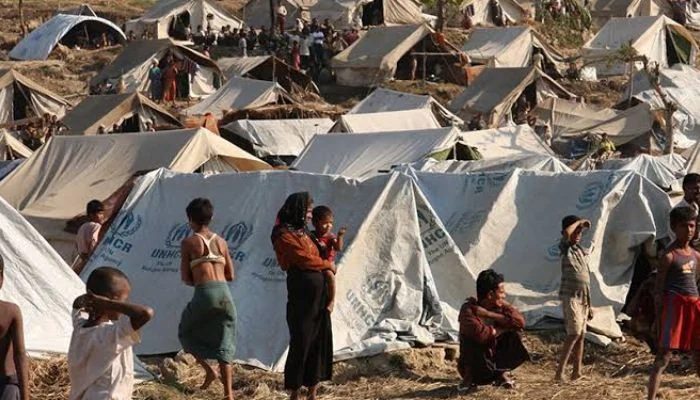
The 2016-17 campaign forced more than 700,000 mostly Muslim Rohingya to flee across the border into Bangladesh, arriving with reports of mass killing, gang-rapes, and burned-down villages. More than one million Rohingya now live in the world's largest refugee camp in Cox's Bazar, Bangladesh, while fewer than 600,000 are estimated to remain in Buddhist-majority Myanmar.
While the ICJ has no way of enforcing its decisions, the ruling heaps more international pressure on Myanmar's leader Min Aung Hlaing, who commanded the military during the campaign before ousting Aung San Suu Kyi's government in a 2021 coup. He faces a pending arrest warrant from the International Criminal Court on allegations of crimes against humanity.