
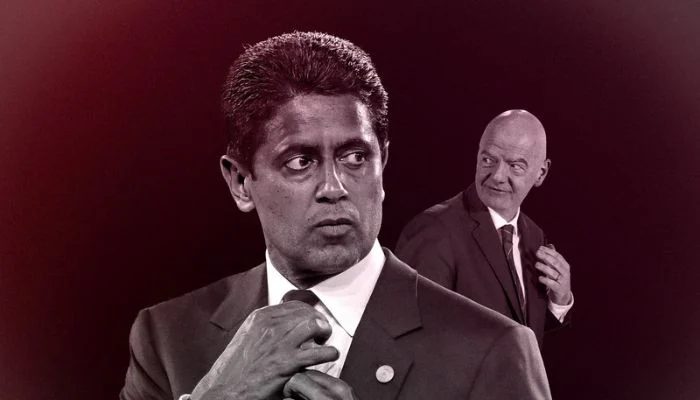
Europe's richest clubs are considering a project that could reshape global football power dynamics, more than five years after the European Super League controversy. The European Football Clubs (EFC), led by Paris Saint-Germain (PSG) President Nasser Al-Khelaifi, is exploring the creation of a global organization to unite clubs worldwide.
- Notably, membership has grown from 250 clubs in 2023 to 920 by September 2026.
- Europe's wealthiest clubs aim to consolidate their financial dominance as FIFA considers expanding the 2029 tournament from 32 to 48 teams.
- The tension highlights ongoing struggles over revenue distribution, fixture congestion, and calendar scheduling as top clubs demand a larger voice in governance.
Notably, membership has grown from 250 clubs in 2023 to 920 by September 2026. According to The Guardian, this proposed "World Football Clubs" body could run its own international matches.
Europe's wealthiest clubs aim to consolidate their financial dominance as FIFA considers expanding the 2029 tournament from 32 to 48 teams. European clubs previously threatened to boycott the FIFA Club World Cup unless granted more control, though FIFA and EFC are now nearing a commercial partnership.
Meanwhile, opposition is mounting; the Union of European Clubs (UEC) filed a formal complaint with the European Commission on Monday, 16 November, against the Union of European Football Associations (UEFA)'s exclusive representation agreement with EFC. Critics argue that this arrangement sidelines hundreds of smaller clubs from key decisions regarding the sport's future, creating a deeper divide between elite institutions and the broader footballing pyramid.
The tension highlights ongoing struggles over revenue distribution, fixture congestion, and calendar scheduling as top clubs demand a larger voice in governance. Industry analysts note that if successful, this new body could fundamentally alter the traditional authority held by governing bodies like FIFA and UEFA.
As discussions continue behind closed doors, stakeholders across the football ecosystem are watching closely to see how regulatory authorities respond to these competing interests. Further announcements regarding the structural framework of the proposed organization are expected in the coming months as negotiations progress.