
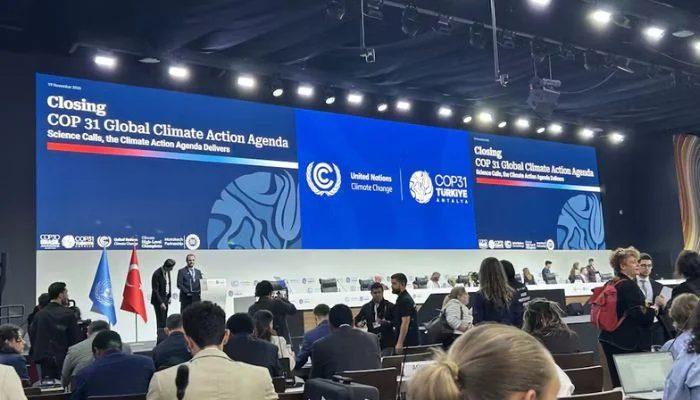
Climate summits tend to end the same way: exhausted ministers, a text watered down until it says nothing, and a press release calling it "a step forward." Antalya broke the pattern. The longest UN climate conference on record ended Sunday, November 22, without its flagship agreement. It was the first such collapse since Copenhagen in 2009.
- The Antalya climate conference ended without its flagship agreement after running two days past its deadline.
- Saudi Arabia and Russia refused any wording mentioning fossil fuels, causing the package to die.
- Delegates still advanced a just transition framework, an ocean work plan, and electricity targets.
Antalya Climate Conference
The summit ran two days past its Friday deadline. The "Antalya pact" drafted by the Turkish and Australian presidencies would have urged countries to electrify their economies, limit the overshoot of the 1.5C threshold and at least triple adaptation finance by 2035. But what it never did was name fossil fuels.
Turkey's Murat Kurum admitted there was no consensus, and the package died. However, one detail stands out. The first draft, published a week earlier, called for an immediate transition away from fossil fuels.
Every version after that scrubbed it. Saudi Arabia and Russia refused any wording and under one determined holdout is enough. The COP 28 pledge to "transition away" from fossil fuels was sold as a breakthrough.
Three years on, it looks like a ceiling; nobody has built on it. For years, vulnerable and wealthy countries alike have swallowed weak texts and called them progress. This time the EU, Panama, the Marshall Islands, and Norway said no, and the hall applauded.
Australia's Chris Bowen essentially admitted that worsening climate impacts had turned certain words into red lines. It is also not a clean morality tale, and telling it that way would be dishonest. Addressing the uncomfortable aspect, the African Group's chair, Mohamed Adow, told the BBC that the fossil fuel fight swamped his bloc's actual priority, which is "Adaptation money." The tripling pledge had no baseline, so donors could claim to have met it while spending almost nothing new.
Adow called Europe's stance hypocritical, since it demands fossil-fuel roadmaps from others while expanding supply at home. China, Pakistan, and the African group did not join the rejection. So, the principled "no" has a price, and the countries most exposed to floods and droughts will pay it first, in delayed funding.
The EU deserves credit for the stand. But a walkout that costs the vulnerable more than the rich is not free virtue. The rejected text also leaned on carbon removal.
Global Climate Policy and COP32
Most scientists accept some of it will be needed. But the technology