
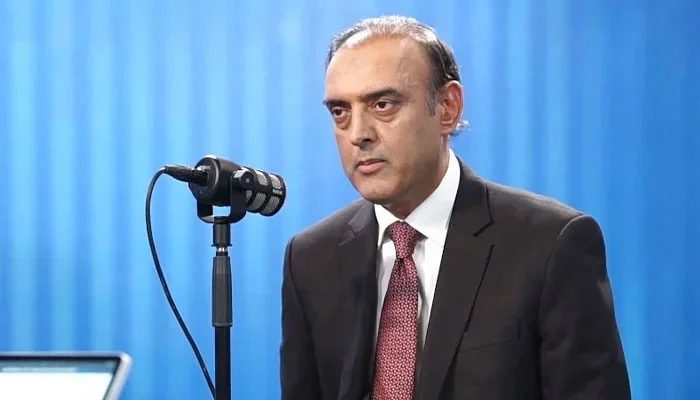
Climate finance "must do more than support green investments" and should help communities build resilience and adapt to a changing climate, the central bank governor said, as the country hosted a global regulators' forum on inclusive green finance. State Bank of Pakistan (SBP) Governor Jameel Ahmad made these remarks at the opening of a four-day learning programme on inclusive green finance policy implementation in Islamabad, organised by the SBP and the Alliance for Financial Inclusion (AFI), according to a statement issued on Tuesday.
The programme brings together 38 participants from central banks and financial regulators in 24 countries across four continents. It is the first time the event has been held in Pakistan.
In his keynote address, Ahmad said that climate change and financial exclusion are deeply interconnected. The people most exposed to climate shocks are smallholder farmers, micro and small enterprises, and low-income households.
They are also the least likely to have insurance, savings, or access to formal finance. The governor pointed to Pakistan's experience during the devastating floods of 2022, which caused nearly $15 billion in physical damage and a further $15 billion in economic losses.
They affected more than 30 million people and damaged 2.2 million homes. He said this shows why financial systems must be both green and inclusive.
Highlighting Pakistan's progress, he noted that financial inclusion has reached 71 per cent, the gender gap has narrowed to 27 per cent, and Pakistan is sharing its Green Taxonomy and climate risk framework with peer regulators across the AFI network. He highlighted the SBP's progressive regulatory framework, which includes the Green Banking Guidelines (2017), the Environmental and Social Risk Management Framework (2022), the Pakistan Green Taxonomy, and regulations on climate-related financial risks, along with the Climate Stress Testing Guidelines (December 2025).
The governor also highlighted the Pakistan Women Inclusive Finance Program, supported by the Asian Development Bank (ADB), and noted that Pakistan joined the Women Entrepreneurs Finance Code in 2025, with the SBP serving as the anchor institution. The governor outlined Pakistan's work under AFI's four pillars: Promotion, Provision, Protection, and Prevention.
He shared that participants will exchange experiences on operationalizing green finance, supporting climate-smart agriculture, and addressing implementation challenges. "The success of any policy framework is ultimately measured by its implementation and its impact on people's lives," Ahmad said.
Aban Haq from AFI and Lasse Melgaard from the World Bank also addressed the session, stressing the importance of knowledge-sharing platforms in disseminating good practices.