
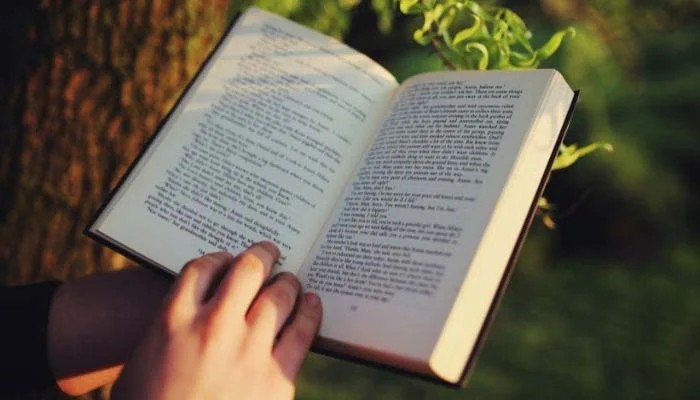
Bedtime stories with father. Every night before sleeping, my dad would sit with me, and we would read a book together. The bedtime stories eventually morphed into evening and morning-time stories because I could not wait. The eagerness to figure out what the climax would be in 'The Twits' gnawed at my brain, and I just had to read. Growing up, my love for reading grew day by day, and by the time I reached my teens, I had already finished reading more books than I could remember, thanks to my parents and their respect for reading. And yes, I believe that reading must be respected. Books must be respected before they are loved. Whenever I would be reading and accidentally fold a page or hold the book in a way that would result in a bent spine, my dad would warn me not to do that.
And now the very spines of books are being ripped off. As time went by, I have kept my books in pristine condition because books, to me, are not just mere collections of paper; rather, they are treasures that must be protected. However, like every resource on this planet, humans have found a way to endanger this treasure as well. According to دی ٹیلی گراف (The Telegraph), at the beginning of 2024, the popular artificial intelligence research company named اینتھروپک (Anthropic), which built کلاؤڈ (Claude) - known to be one of the most reputable AI chatbots - recruited ٹام ٹروی (Tom Turvey) to 'destructively scan all the books in the world'. Eventually, this led to the birth of پراجیکٹ پاناما (Project Panama).
In the summer of 2025, the copyright lawsuit Bartz v Anthropic PBC led to a federal judge ruling that scanning legally purchased physical books into digital copies, despite the fact that the original copies could be destroyed, constituted transformative fair use. Similarly, federal judges gave the same rulings in copyright cases involving اوپن اے آئی (OpenAI) and میٹا (Meta). However, in another case, a federal judge approved a $1.5 billion copyright settlement in 2025, which would require Anthropic to pay thousands of authors about $3,000 per book after the company used pirated copies of their works to train Claude.
So artificial intelligence is demolishing books to become one. As alarming as that sounds - and it is - under Project Panama and similar initiatives, AI companies are tearing, cutting, and shredding books to feed information and train their models. These models constantly rely upon the feeding of information to function, and as they continue to develop, they pose dangerous consequences because information is never enough for them. The birth of AI was intertwined with the existence of data. An AI model can only be as powerful as the data you feed into it, and these models are constantly hungry for more. When they utilized and exhausted every possible channel, they turned to books, which are a primary source of data.
As the world becomes more engrossed in artificial intelligence and people now resort to doom-scrolling rather than picking up a newspaper or reading a book in their free time, the importance of books continues to diminish. Books are not just meant to be prioritized during one's educational journey; rather, they are tools that shape your mind, expand your knowledge, instill emotions such as empathy, and help you grow. Reading allows you to understand people and their perspectives, improves your critical thinking, strengthens your cognitive processes, and shapes our collective future.