
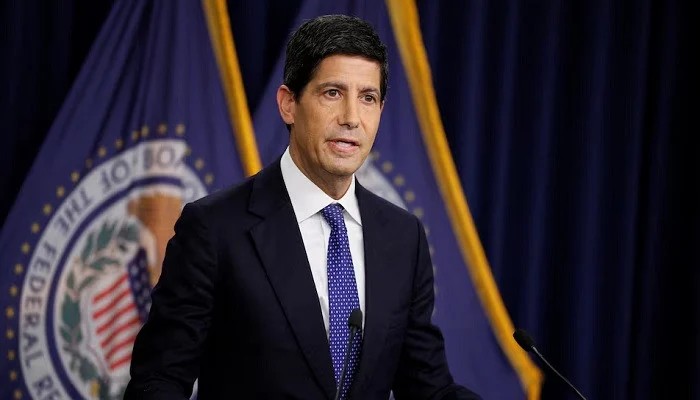
The Federal Reserve raised interest rates on Wednesday and flagged more hikes in the coming months, with new US central bank chief Kevin Warsh joining a unanimous decision that effectively acknowledges the Trump administration's inability so far to control inflation that policymakers worry could worsen. While President Donald Trump had promised to lower prices on his watch, the combined impact of his global import tariffs, an energy shock following the start of the US-Israeli war with Iran, and capital spending from the artificial intelligence boom has kept price pressures intense enough that the Fed felt it needed to raise its benchmark overnight interest rate by a quarter of a percentage point to the 3.75%-4.00% range.
Updated quarterly economic projections showed 16 of 18 policymakers anticipate at least one more quarter-percentage-point hike by the end of this year, with only two of them seeing rates remaining stable from here. All but one indicated they saw upside risks to inflation that they no longer described as largely arising from one-off supply shocks. Warsh, who again did not submit rate or other economic projections, attributed the need for tighter monetary policy in part to an economy he sees as picking up speed, with strong economic and job growth adding to price pressures that no longer seem rooted in oil costs or import tariffs alone.
The rate increase was the first such move in three years and the first policy shift under the new Fed chief, who took office in late May after being selected by Trump with an expectation that he would cut rates. "Inflation remains elevated. Today's policy action will support a timelier return to the committee's 2% goal," the central bank's Federal Open Market Committee said in its policy statement after the end of a two-day meeting.
Trump reacted quickly, repeating what has been a standing call since returning to office in January 2025 that interest rates in the US should be slashed to perhaps 1%, a level usually associated with Fed efforts to boost the economy out of a crisis and something that would likely be inflationary in normal times. The president's reaction highlighted the significance of the Fed's move under the new administration.