
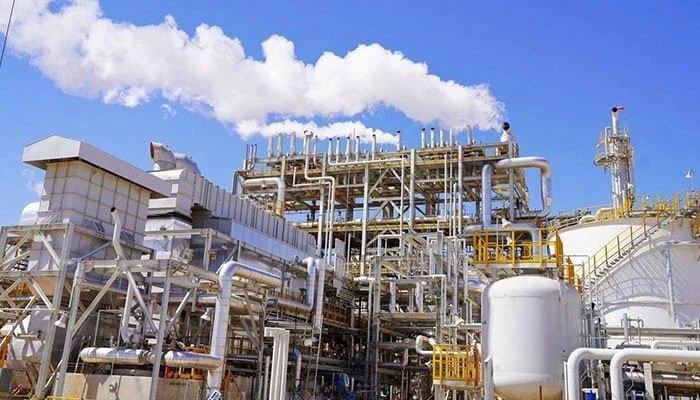
Four Pakistani refineries that signed agreements with the government on September 24 to undertake major brownfield upgrades have yet to formally submit their detailed projects to Inter State Gas Systems (ISGS), the state-owned company designated to monitor implementation of refinery-upgrade projects and regulate the associated upgrade incentive accounts. The refineries - Attock Refinery Limited (ARL), National Refinery Limited (NRL), Pakistan Refinery Limited (PRL) and Cnergyico Pakistan Limited (CPL) - have committed themselves to investments involving Green Fuel, Bottom-of-the-Barrel (BoB) conversion, capacity expansion and improvements in petroleum-product quality.
However, the projects are still at different stages of engineering and feasibility work. The refineries are currently completing feasibility studies and Front End Engineering Design (FEED), after which their detailed upgrade projects will be submitted to the government entity. The delay in formal submission does not mean that the refineries have backed away from their commitments.
Rather, refinery executives say the signing of the agreements represents a commitment to the projects, while detailed technical configurations, costs, financing arrangements and engineering packages are being finalised. The four projects currently under consideration have an estimated combined investment of around $4.2 billion, although the final cost will depend on the configuration ultimately selected by NRL and the financing and scope of individual projects. If PARCO's Green Fuel project of $600 million is added, the cost of the five refinery upgrade projects will increase to $4.8 billion.
The government's refinery-upgrade programme is designed to fundamentally change Pakistan's refining landscape. Besides improving the quality of domestically produced fuels, the programme is expected to increase the country's overall crude-oil refining capacity from approximately 450,000 barrels per day (bpd) to around 550,000 bpd. Attock Refinery Limited (ARL), which has a crude-processing capacity of 53,400 bpd, is planning a $600 million upgrade focused on improving fuel quality and its product mix rather than a major Bottom-of-the-Barrel conversion, which the company has concluded would not be economically viable because of its relatively small furnace-fuel-oil stream.
The project includes new naphtha treatment and reforming units and an upgrade of its Diesel Hydro-Desulphurisation unit, with the aim of increasing motor-spirit production by around 25 percent while bringing diesel to Euro-V standards. ARL has completed the licensor FEEDs through Honeywell and is nearing completion of the project FEED before inviting EPC bids. The company is examining financing options but does not intend to seek a fresh equity injection.
Pakistan Refinery Limited (PRL) is planning the largest project among the four refineries, with an estimated investment of $1.8 billion to virtually eliminate furnace-oil production and double crude-processing capacity from 50,000 bpd to 100,000 bpd. PRL is looking towards Chinese companies for financing, but the proposed arrangement requires a sovereign guarantee or a corporate guarantee from Pakistan State Oil (PSO), which has indicated that its financial position may not allow it to provide the required guarantee.
National Refinery Limited (NRL) is still evaluating its final configuration for a hybrid Green Fuel and Bottom-of-the-Barrel project estimated at $300 million to $800 million. It has launched a six-month feasibility study by a UK-based firm to determine the configuration for upgrading petrol and other products. NRL has already spent around $300 million to achieve Euro-V high-speed diesel production and is considering increasing crude-processing capacity from 50,000 bpd to around 70,000 bpd.
It also plans to expand its lubricants business and expects petrol production to rise by 30 to 40 percent following the upgrade. Cnergyico Pakistan Limited (CPL), the country's largest private refinery, is preparing a $1.2 billion programme to raise crude-processing capacity from around 156,000 bpd to 200,000 bpd. The project covers Green Fuel, Bottom-of-the-Barrel conversion and a new Single Point Mooring facility, with work on the Euro-V/VI component already under way.
Studies are continuing on the Bottom-of-the-Barrel and expansion phases. Under the government's refinery policy, CPL is projected to increase gasoline production to around 6,500 tonnes per day and diesel production to nearly 11,000 tonnes per day while sharply reducing furnace-oil output. Pak-Arab Refinery Company (PARCO), which has yet to sign the upgrade agreement, has indicated that it intends to do so before October 24, 2026.
It is planning a $600 million Green Fuel project and has already reduced furnace oil's share of production from around 20 percent to approximately 14 percent. The project is expected to reduce it further by 10 to 11 percent in two phases, while moving the refinery from Euro-III to Euro-V gasoline and diesel. The upgraded refineries are expected to produce petrol and high-speed diesel conforming to Euro-V specifications, while reducing the production of furnace oil, which has traditionally constituted a significant portion of Pakistan's refinery output.
According to projections associated with the programme, furnace-oil production is expected to fall from approximately 15,417 tonnes per day to 5,714 tonnes per day after completion of the upgrades. At the same time, motor gasoline (Mogas) production is projected to increase from around 10,702 tonnes per day to 18,402 tonnes per day, while high-speed diesel production is expected to rise from 21,237 tonnes per day to 29,517 tonnes per day. The planned investments, therefore, represent more than a fuel-quality exercise.
They are aimed at changing the product slate of the country's refineries, increasing production of higher-value transportation fuels and reducing the volume of furnace oil req.