
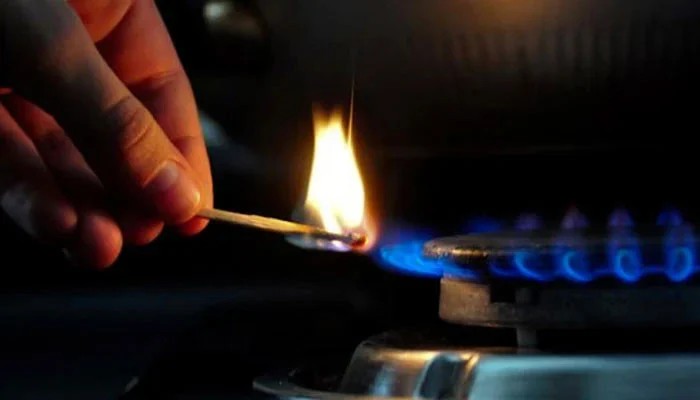
Gas load management has begun for domestic consumers as Pakistan faces growing uncertainty over LNG supplies from Qatar amid the ongoing Strait of Hormuz crisis, with authorities restricting household gas supply to key cooking hours. The force majeure declared by Qatargas on March 4, 2026, following the attack on its LNG production plant at Ras Laffan has not yet formally been lifted due to a lack of tangible progress between Iran and the United States on reopening the Strait of Hormuz and ending the US naval blockade.
In the month of September, Pakistan arranged two RLNG cargoes - one reached on September 10 and other reached on September 23 from Qatar with the help of Iranian officials concerned. A senior official of the Petroleum Division told "We are providing three hours of gas in the morning from 6am to 9am, at lunch from 12pm to 3pm and during dinner time from 6pm to 9pm, as the system does not have enough gas to provide it to the domestic sector 24/7.
The power sector also consumes imported gas, including the less available RLNG, for power generation," the official said. Pakistan's domestic gas production stands at around 3.2 billion cubic feet per day (bcfd), while the country has agreements with Qatar and Italy's ENI for the import of around 1 bcfd of RLNG. Officials, however, are increasingly concerned about meeting demand during the coming winter as LNG availability remains uncertain.
The government may decide next month to purchase spot LNG cargoes for October to meet rising requirements, as the winter season will begin in the coming weeks in central and northern Punjab and Khyber Pakhtunkhwa. Authorities are also making efforts to secure more than two LNG cargoes from Qatar, but officials say the availability of these supplies will depend heavily on developments in the Strait of Hormuz.
The pressure on LNG supplies is expected to intensify during winter. Pakistan will require nine LNG cargoes in December 2026 alone to meet the requirements of the domestic, industrial and power sectors. A Qatari delegation is scheduled to visit Pakistan from September 30 to October 15 to finalise the Annual Delivery Plan (ADP) for LNG cargoes for the 2026-27 winter season.
Officials said the geopolitical situation in the Middle East has made it difficult to determine whether Qatar will be able to maintain smooth LNG supplies to Pakistan under the two long-term agreements. Under the agreements, Qatar is committed to supplying five LNG cargoes a month at 13.37 percent of Brent and four cargoes a month at 10.2 percent of Brent. In the recent past, Pakistan had faced an LNG surplus, prompting authorities to divert two LNG cargoes a month from Qatar to international markets under the Net Proceeds Differential (NPD) mechanism.
According to officials, around 24 cargoes will not be received by Pakistan during 2026 as a result of such diversions. Reports have also emerged that Qatar diverted 24 cargoes originally intended for Pakistan to Egypt under the NPD clause. Under the NPD arrangement, Pakistan does not receive the profit when a cargo allocated to it is sold in the international market at a profit.
However, if the cargo is sold at a loss, Pakistan bears the loss. The availability of the remaining cargoes will depend on the situation in the Strait of Hormuz. Pakistan has also diverted LNG cargoes from ENI to international markets in the past because of the LNG surplus.
Under the agreement with the Italian company, Pakistan LNG Limited shares the profit and loss from the sale of diverted cargoes. Officials said ENI has so far sold Pakistan's diverted cargoes at a profit. Officials said ENI will provide one LNG cargo each in January 2027 and December 2027.
Meanwhile, dedicated domestic gas fields are supplying system gas to the power sector for cheaper electricity generation, while around 250-300 million cubic feet per day of imported RLNG is also being supplied to power plants. With winter demand approaching and uncertainty surrounding LNG shipments, authorities are now facing the challenge of balancing limited gas supplies among households, industry and the power sector while securing additional cargoes to prevent a wider supply crunch.